
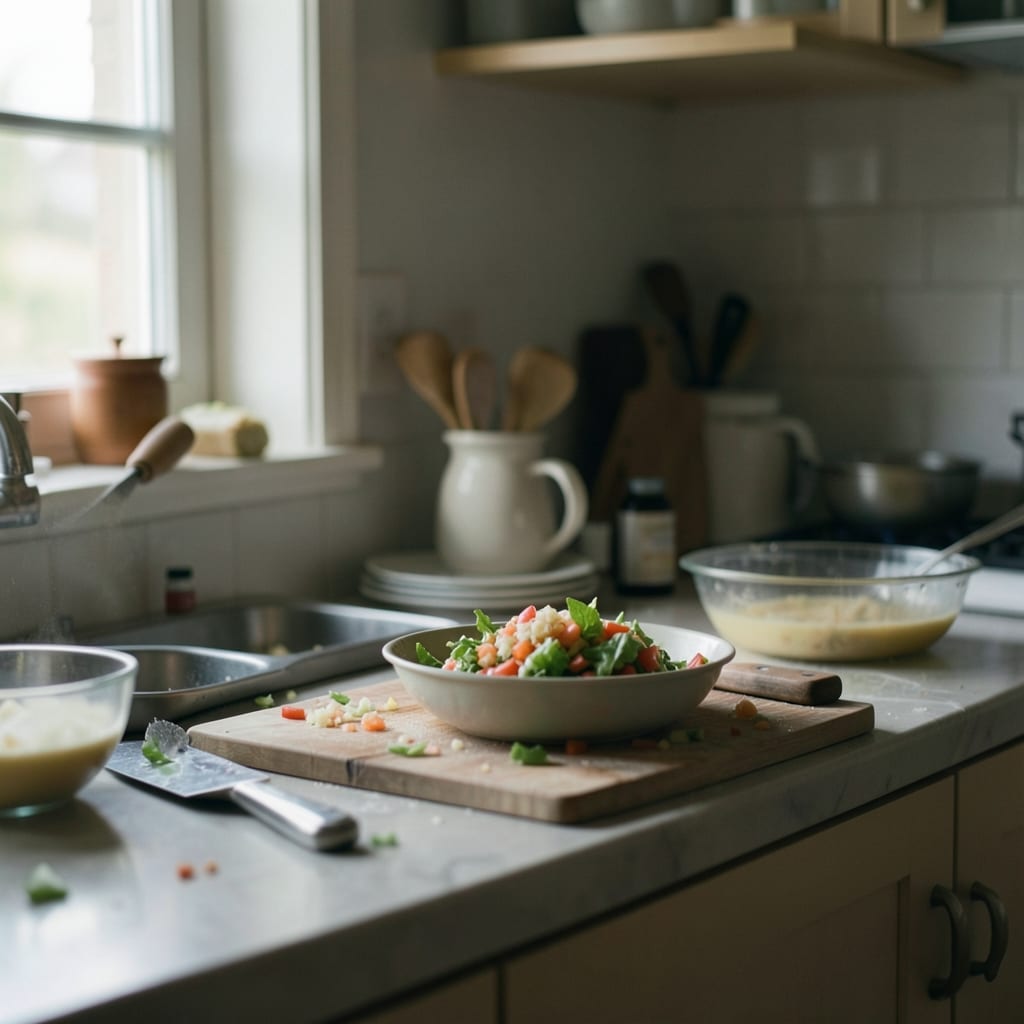
What this work is made with
This page is not a story. It is a list of things—the objects that hold the work together, the tools that shape what you’ll find here.
A recipe site does not live in the words alone; it lives in the hands that hold the pan, the heat that changes the ingredients, and the quiet moments when a dish finally comes together.
Here, you’ll meet the things that make *Chicken Recipes Zest* what it is: the worn edges of a cast-iron skillet, the uneven grooves of a wooden cutting board, the balance of a knife that has seen too many onions. These are the things that teach us what matters—and what doesn’t.
The things that do the work
Four objects shape every recipe here. They are not glamorous, not new, and not always perfect—but they are the ones that have never let us down. Each has a history, a scar, or a trick only the cook knows.
These are the tools that turn a list of ingredients into something real.
Cast-iron skillet
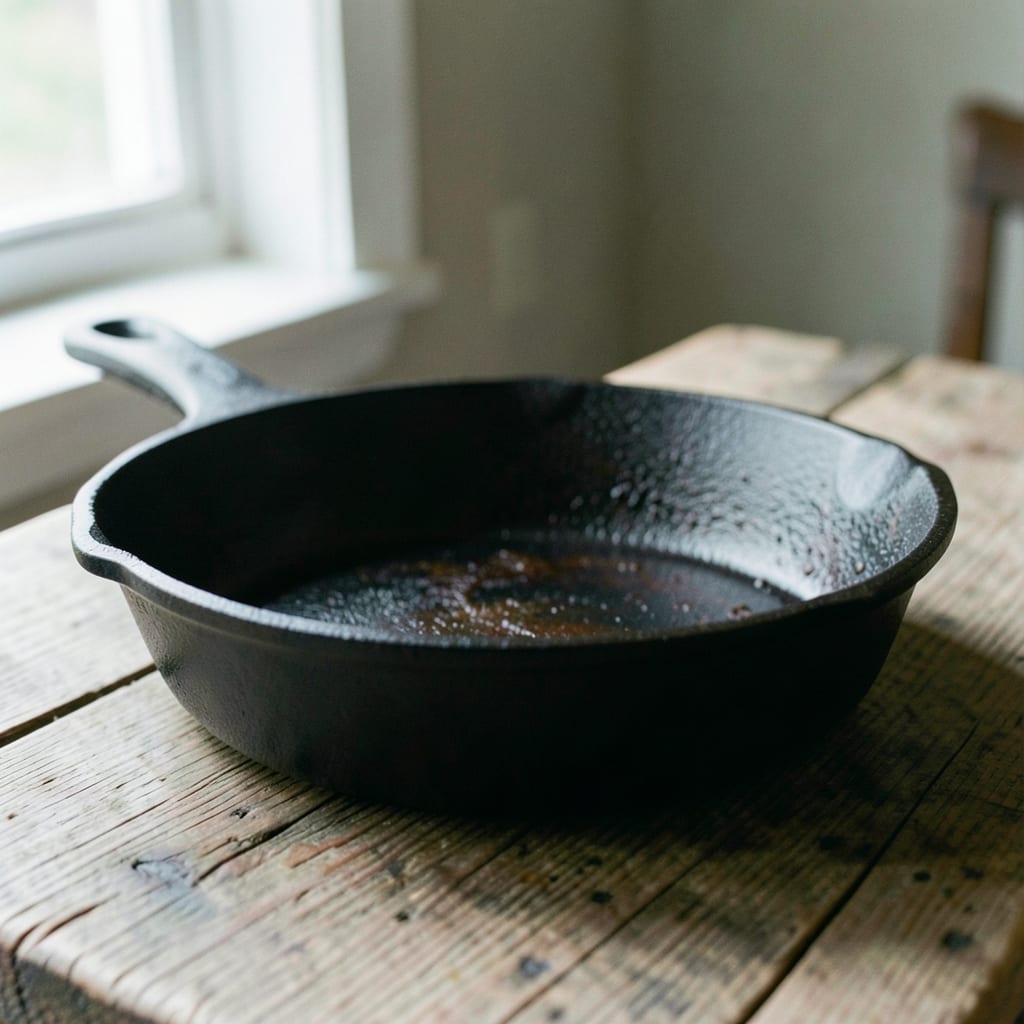
A dented, 10-inch skillet with a handle that has been wrapped and rewrapped in wire over the years. It arrived in my kitchen from my abuela’s home in Mexico City, where it was used to fry huevos rancheros and sear carnitas for decades.
The seasoning is uneven—some patches are dark and glossy, others still show the bare iron beneath.
It has been here since I was 12, when she handed it to me with a warning: *‘No lo laves con jabón’*—don’t wash it with soap. That rule changed how I cook.
The first time I burned the bottom of a pan of chicken thighs, the skillet absorbed the smoke instead of screaming. Now, it’s the only pan I use for crispy skin, and the only one that can handle a high heat without warping.
It has ruined 17 batches of cornbread, but every time, the chicken comes out perfect.
Wooden cutting board
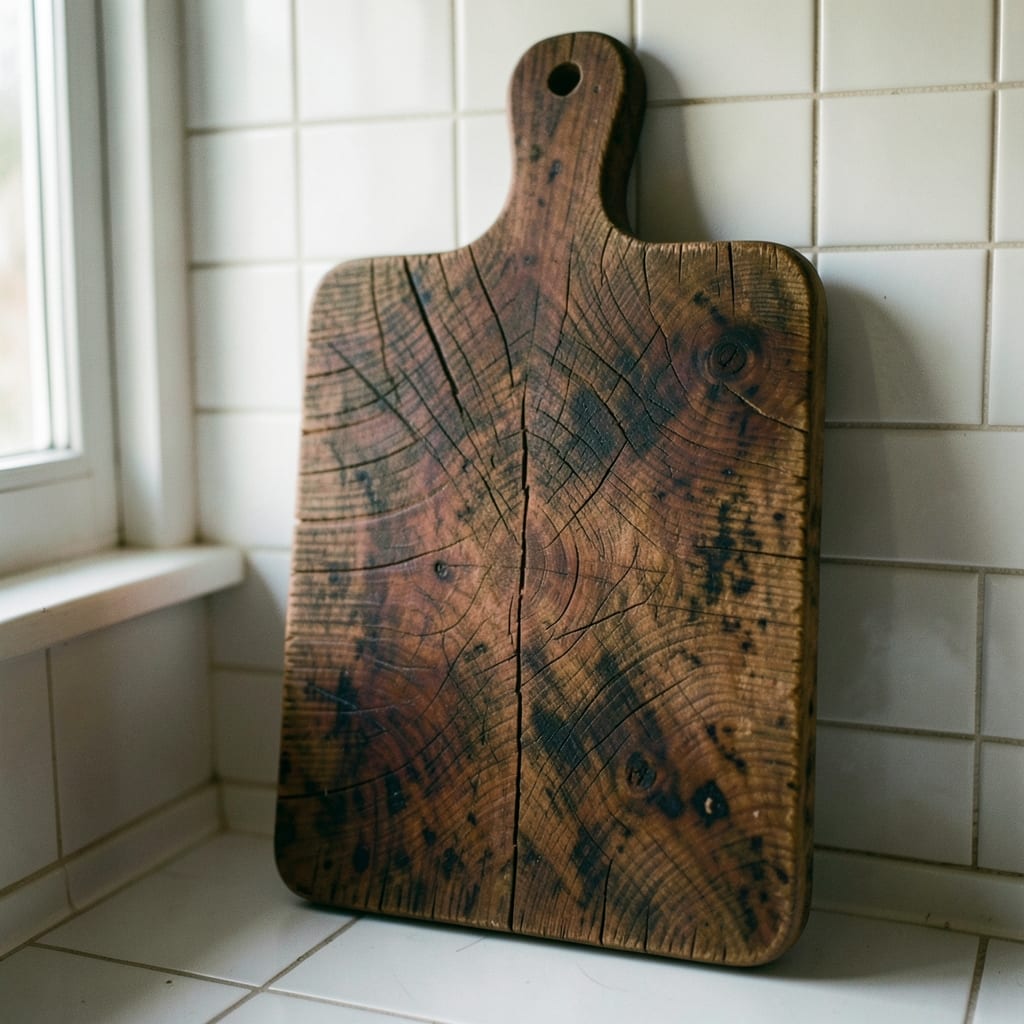
A 12-inch teak board with a crack running from the center to the edge, held together with a single screw no one can see. It was a $15 impulse buy from a market in Bushwick, and it has never been replaced.
The grain is uneven, and the surface is pockmarked from years of knife work, but it stays flat under even pressure.
It has been here for eight years, since the day I sliced into a whole chicken breast for the first time and the knife slipped—just once—leaving a shallow gouge. That crack is why I always cut away from my body now.
The board has taught me to respect the tools, and to notice when something isn’t right. It’s also why I never use it for raw meat anymore; the juice soaks in, and the scent lingers for days.
Tongs
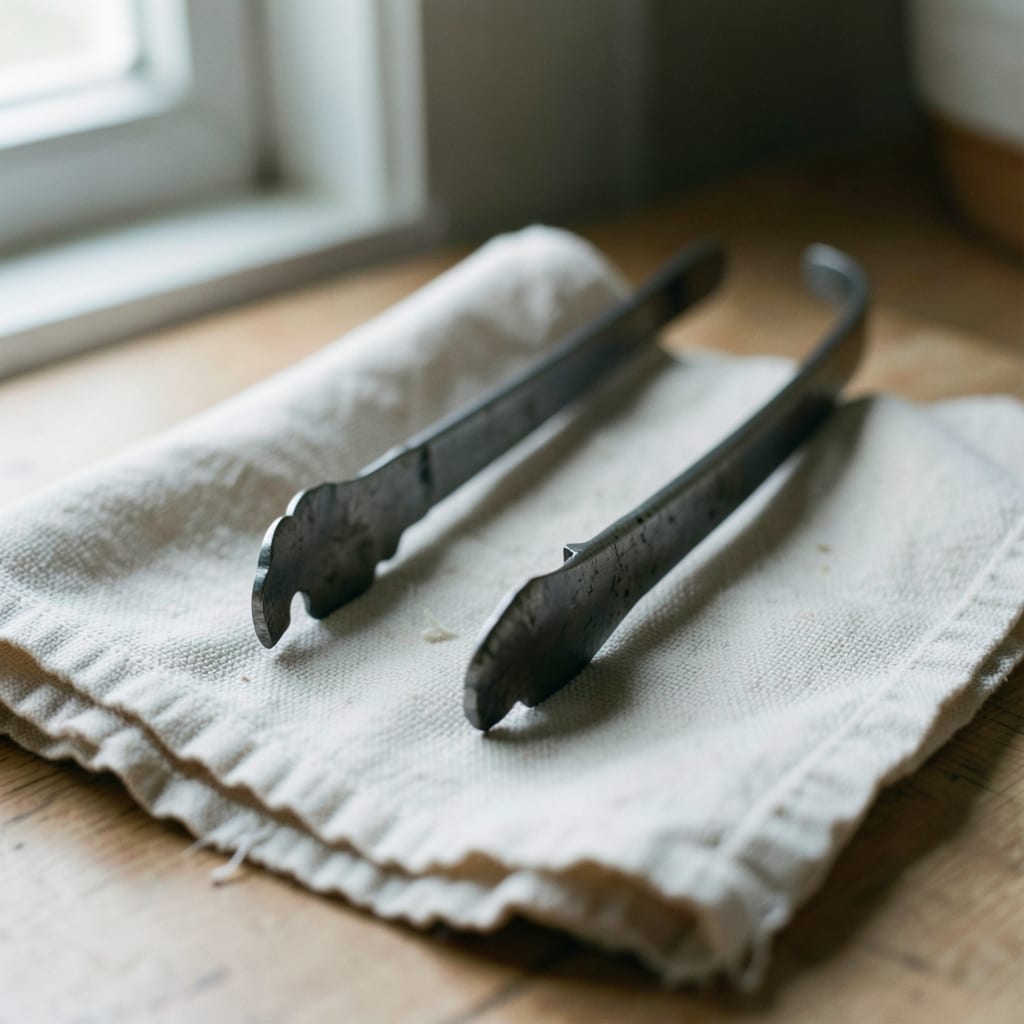
A pair of stainless-steel tongs with one prong bent at a 45-degree angle after dropping a pot of boiling water on them years ago. The handle is wrapped in faded red tape, held in place with duct tape that has been replaced three times.
They cost $8 at a thrift store and have never been sharpened.
They have been here since the first time I tried flipping chicken tenders in my tiny apartment stove. The bent prong is why I now use them to turn everything—even things that don’t need turning.
They’ve saved 23 batches of fried chicken from sticking to the pan, and they’re the only tool I trust to handle a sizzling skillet without burning my fingers. The tape is coming loose again, but I won’t replace it until it falls off.
Chef’s knife
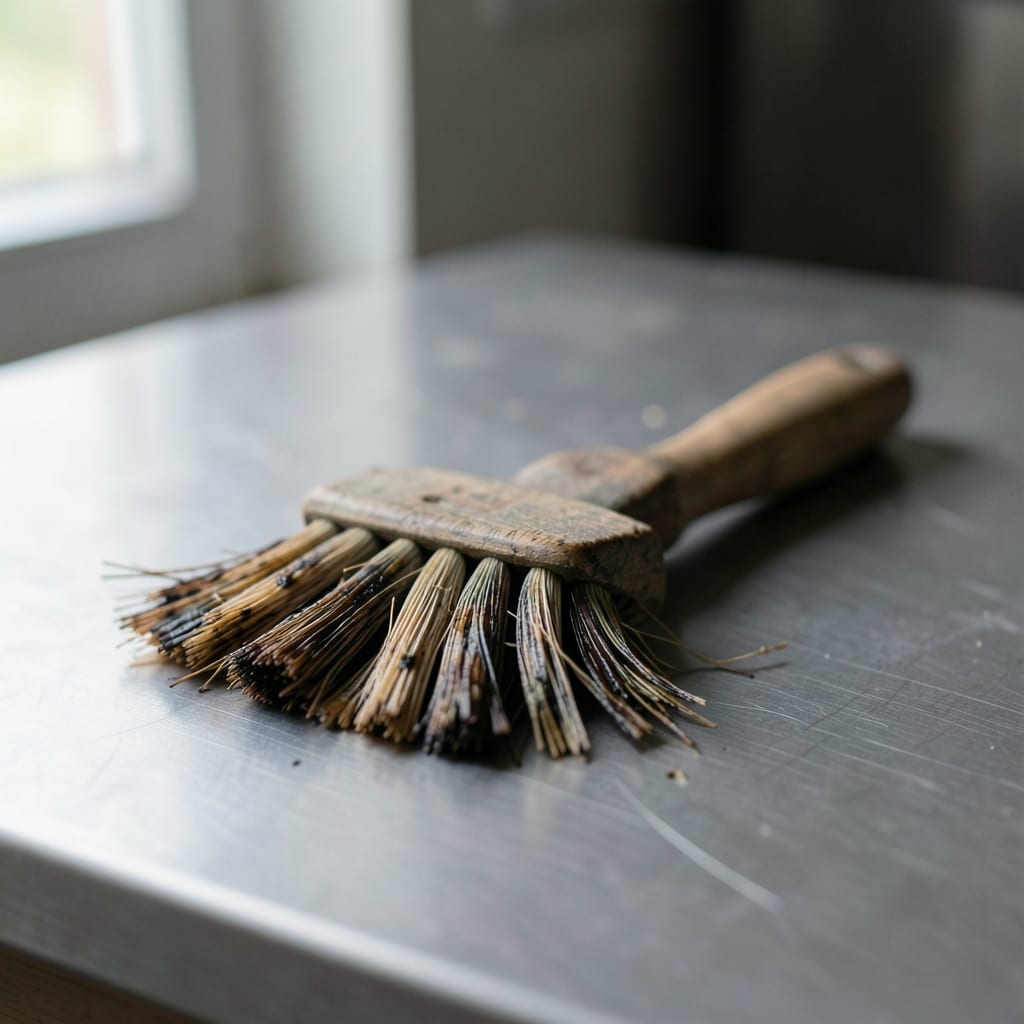
A 10-inch Wüsthof with a handle wrapped in black electrical tape, held in place with a single knot. The blade is honed to a razor edge but has a chip near the tip from the time I tried to cut through a frozen chicken breast.
The tape was added after the original handle cracked in half during a panicked attempt to dice an onion for 50 people.
It has been here since I moved to New York, and it’s the only knife I’ve ever owned. The tape is the only thing keeping it together now, and it’s held on with superglue underneath.
This knife has taught me that sharpness matters more than brand, and that a good tool lasts longer than you think. It’s also why I now buy frozen chicken pre-thawed—because I’ll never risk this blade again.
What is not in the drawer
Some things are left out by choice. These are the things that would make the work easier, faster, or more polished—but would also change what it is.
Deliberately absent
- A food scale. Every recipe here uses volume measurements because that’s how most people cook, and because a scale can’t tell you when a chicken is *done* or when a sauce has thickened enough.
- A thermometer. We rely on the cast-iron skillet and the tongs to tell us when meat is ready—because a number on a dial can’t replace the sizzle of crispy skin or the give of a properly seared cut.
- A blender or food processor. Some textures are better made by hand—like a roux that needs constant stirring, or a vinaigrette that should be shaken, not pulsed.
- A fancy camera. Every photo here is taken with a phone, held by hand, in the same kitchen light. The imperfections are part of the work.
Behind the scenes
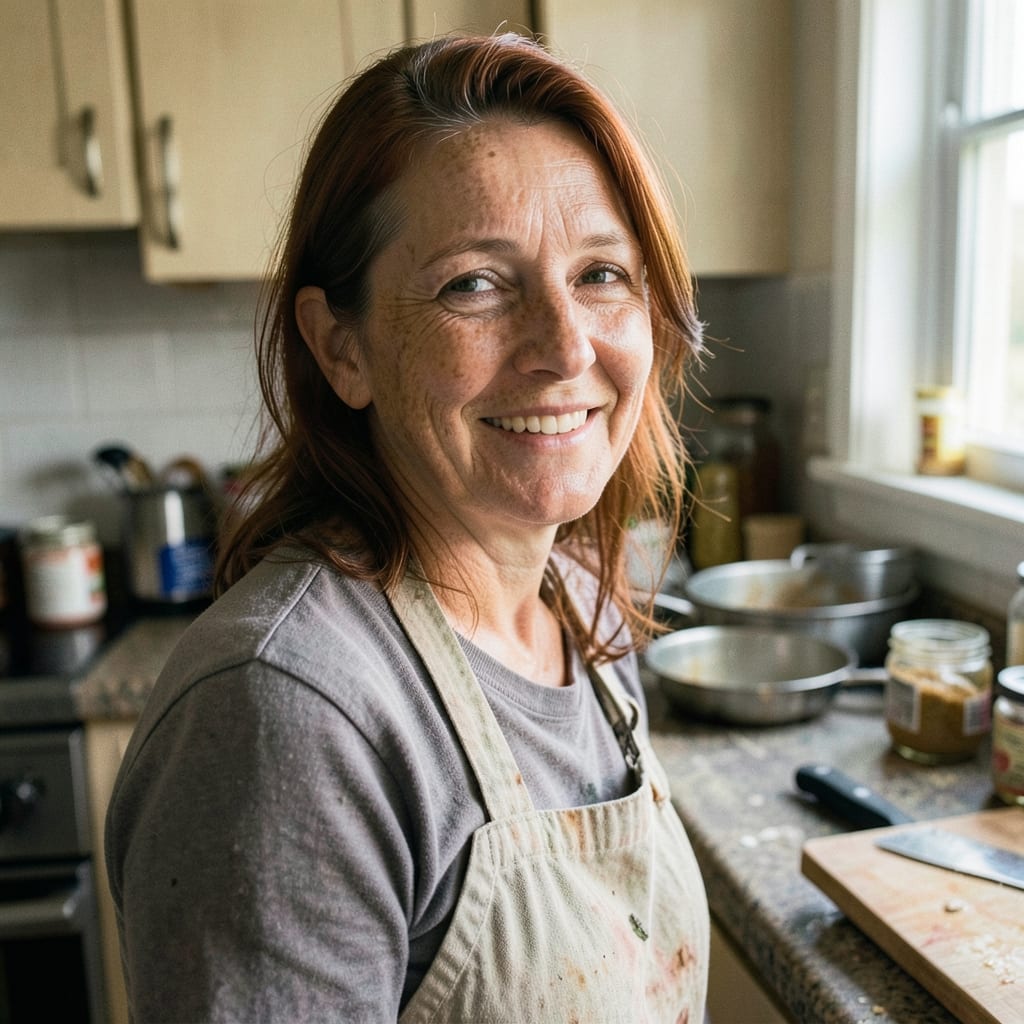
I am Delia Fontaine, the founder and editor of *Chicken Recipes Zest*. I am the one who holds the tongs, who listens to the skillet sing, and who still flinches when I see a knife with a chipped blade.
This work started in my abuela’s kitchen in Mexico City, where I learned that a recipe is never just a list of ingredients—it’s a memory, a temperature, a moment of patience. She handed me the cast-iron skillet and said, *‘Aquí es donde empieza todo’*—here is where everything begins.
I brought it to Brooklyn, where it taught me that good food is made with love, sweat, and a little bit of chaos.
This work has given me a habit I can’t break: I now notice the way light hits a cutting board, the weight of a knife in my hand, the exact moment a pan starts to smoke.
I also have a permanent burn scar on my thumb from the time I dropped a pot of oil, and I’ll never trust a recipe that doesn’t include a warning about splatter. The things here have shaped me as much as I’ve shaped them.
I am here to make sure every recipe on this site feels like it was made for *you*—not for a perfect photo, not for a fancy kitchen, but for the real moments when food brings people together. That’s why the tools matter. That’s why the scars matter.
And that’s why, if you ever visit the contact page, you’ll find me standing in front of a stove, holding a pair of tongs that are one step away from falling apart.
Why any of this matters to you
These things—the skillet, the board, the tongs, the knife—are why the recipes here work. They are why a dish tastes like it was made by someone who cares, not just copied from a screen.
They are why you’ll never see a photo of a perfectly arranged plate here; instead, you’ll get a recipe that accounts for the real world: the uneven heat of your oven, the knife you already own, the way your hands move when you cook.
Every page on this site is built with these objects in mind. The words are tested in the same skillet, the instructions are written with the same tongs, and the advice is given by someone who has burned her thumb more times than she can count.
That’s not a flaw—it’s the point.
You’ll find recipes that assume you have a knife that isn’t brand new, a pan that isn’t nonstick, and a kitchen that isn’t spotless. The steps will feel familiar because they’re built for real hands, not just perfect photos. And if something goes wrong? That’s part of the story too.
The recipes are grouped by category: Appetizers, Beverages, Breakfast & Brunch, Desserts, Main Courses and Reviews.