
Main Courses
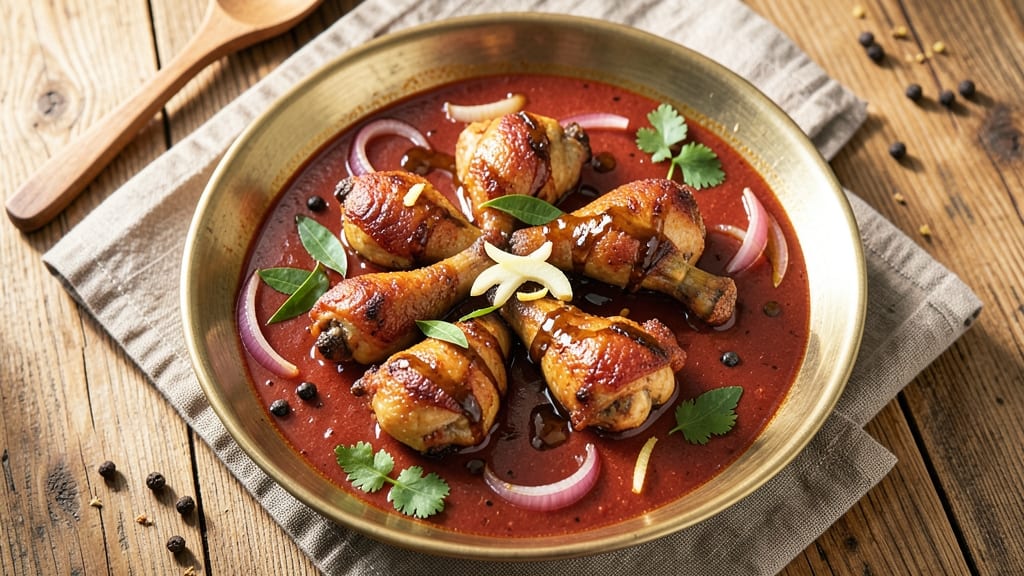
This authentic South Indian chicken curry delivers the bold, tangy flavors you crave—where tamarind and tomato create a perfect balance, and fragrant spices transform simple chicken into a restaurant-worthy dish. 🌟 The secret lies in slow-cooked gravy and tempered spices that build layers of complexity, making every bite unforgettable.
Unlike quick versions, this recipe respects tradition with proper spice blooming and simmering techniques that unlock deep, aromatic flavors.
What sets this curry apart is the authentic technique—starting with a dry roast of whole spices like black peppercorns and cardamom to release their essential oils, then tempering them in hot oil with curry leaves and mustard seeds.
The tamarind-tomato base adds a signature tang, while coconut milk at the end creates a velvety finish. This isn’t just a curry; it’s a flavor journey that starts with the sizzle of spices and ends with a dish that pairs perfectly with steamed rice or appalam.
The result is rich, aromatic, and balanced—where the chicken stays tender, the sauce clings beautifully, and every spoonful delivers the perfect harmony of spice, tang, and creaminess. The slow simmer ensures the flavors meld together, creating a depth you won’t find in rushed recipes.
Whether you’re serving it for a family dinner or a special occasion, this curry will impress with its authenticity and complexity.
Serve it with steamed basmati rice or crispy appalam for the full South Indian experience. The leftovers only get better as the flavors deepen, making it a recipe worth perfecting. Let’s get cooking—your taste buds are in for a treat.
Ingredients for authentic south indian chicken curry
These fragrant spices and tangy tamarind create a restaurant-worthy South Indian curry.
| Ingredient | Amount | Notes |
|---|---|---|
| Chicken Thighs (bone-in, skin-on) 🍗 | 2 ½ lb | Cut into 2-inch pieces |
| Onions 🧅 | 2 whole | Finely chopped, yellow or red |
| Tomatoes (ripe) 🍅 | 4 medium | Blanched and peeled (or 1.5 cups diced) |
| Fresh Ginger 🌿 | 1 ½ inch | Peeled and grated (or 2 tbsp pre-grated) |
| Tamarind Paste 🍈 | ½ cup | Adjust for tang preference |
| Curry Leaves 🌿 | ¼ cup | Fresh, packed |
| Mustard Seeds 🌶️ | 1 ½ tbsp | Whole, yellow or brown |
| Dried Red Chilies 🌶️ | 4 whole | Kashmiri or red chili |
| Green Chilies 🌶️ | 2 whole | Slit lengthwise |
| Black Peppercorns 🌶️ | ½ tsp | Whole, lightly crushed |
| Cardamom Pods 🌿 | 6 whole | Lightly crushed |
| Cinnamon Stick 🌿 | 1 whole | 2-inch piece |
| Coconut Milk 🥥 | ½ cup | Full-fat for creaminess |
| Vegetable Oil 🫒 | ½ cup | High smoke point |
| Salt 🧂 | 1 ½ tsp | Adjust to taste |
The chicken matters here—bone-in, skin-on thighs stay juicier than breasts. Local butchers often have them pre-cut, but if buying whole, ask for legs. For the tamarind paste, Indian grocery stores carry the best quality—avoid the block if you're new to cooking. Look for bright red dried chilies (Kashmiri or red chili) at Whole Foods or Penzeys for authentic heat. Fresh curry leaves are non-negotiable—they make all the difference. If you can't find them, Trader Joe's sometimes carries them frozen, but fresh is ideal.
No tamarind paste? Lemon juice plus 1 tsp sugar mimics the tang (though not identical). Short on coconut milk? Heavy cream at half the amount works in a pinch. The mustard seeds should sizzle loudly when tempered—that's how you know they're fresh. If your dried spices smell musty, toss them. For the ginger, pre-grated works if you're in a hurry, but fresh is always better. The tomatoes? Blanching and peeling ensures a smooth sauce, but if you're short on time, just dice them finely.
This curry tastes even better the next day—flavors meld beautifully after resting. Keeps for 4-5 days in the fridge, freezes for 3 months. I always make double batches because leftovers reheat perfectly with a splash of water. Store the sauce separately from the chicken if you want to reheat just the sauce for rice. The spices lose potency after opening, so transfer them to a dark glass jar for longer storage.
Why You'll Love This Recipe
- Tamarind Magic: The moment that tangy paste hits the pot, you’ll know this isn’t your average curry. It cuts through the richness of the chicken thighs, balancing everything with that signature South Indian tang—no fancy balance needed, just the right amount.
- One-Pot Wonder: Honestly, this recipe is my lazy-day hero. Bone-in thighs simmer in their own juices while you chop onions and ginger—minimal prep, zero stress. The skin crisps up just enough to add texture without extra work.
- Leftovers That Shine: Between us, this curry tastes better the next day. The flavors meld like old friends, and reheating it with a splash of water keeps it moist. Perfect for packing lunches or feeding unexpected guests.
- Budget-Friendly Feast: You’re getting a full-flavored meal for pennies—bone-in thighs stretch for meals, onions and tomatoes bulk it up, and that tamarind paste adds depth without costing a fortune. My wallet and my taste buds win.
Step-by-step instructions for authentic South Indian chicken curry
Here's how to build this rich, tangy curry with layers of spice and authentic South Indian flavors.
🍳 Step 1: Sauté Whole Spices for Deep Aroma
Heat the 0.5 cup vegetable oil in a heavy-bottomed pot over medium heat. Add the 1 whole cinnamon stick, 6 whole cardamom pods (lightly crushed), and 4 whole dried red chilies. Let them sizzle for 30 seconds until the oil becomes fragrant and the spices release their aroma.
This is where the magic starts—those whole spices infuse the oil with their essential oils, creating the foundation for your curry's complex flavor. Don't rush this step; you'll smell the warm, earthy notes of cardamom and the subtle heat of the chilies developing. I like to watch the spices dance in the oil—it's my signal that everything's on track.
🍳 Step 2: Bloom Mustard Seeds and Add Aromatics
Add the 1.5 tbsp mustard seeds and let them pop and sizzle for 30 seconds until they turn golden. Immediately add the 2 whole onions (finely chopped) and cook for 5-6 minutes until they turn golden brown and caramelize.
Here's the thing—those popping mustard seeds are your cue that the oil is ready. The onions should develop a deep golden color, almost like caramel, which adds sweetness to balance the tangy tamarind later. If they start to brown too quickly, reduce heat slightly. This step builds the curry's depth of flavor, so don't skip it.
When the onions are nearly done, add the 1.5 inch fresh ginger (peeled and grated) and 2 whole green chilies (slit lengthwise). Cook for another 1 minute until the raw ginger smell disappears and the green chilies soften slightly.
🍳 Step 3: Incorporate Curry Leaves and Tomatoes
Add the 0.25 cup curry leaves and stir for 30 seconds until they turn bright green and fragrant. Immediately add the 4 medium tomatoes (blanched, peeled, and diced) and cook for 5-6 minutes until they soften and release their juices.
The curry leaves will release their intense, lemony aroma—this is your signal they're ready. The tomatoes should break down into a chunky sauce. I like to mash them slightly with the back of a spoon to help them cook down faster. This creates the tangy tomato base that balances the rich chicken later.
🍳 Step 4: Build the Tangy Base with Tamarind
Add the 0.5 cup tamarind paste and 0.5 tsp black peppercorns (lightly crushed). Stir well and cook for 2-3 minutes until the tamarind dissolves completely and the mixture becomes glossy. Add the 1.5 tsp salt and adjust to taste—this is where you'll taste the authentic tang that makes this curry special.
This is the moment that matters: the tamarind should create a beautiful, glossy sheen in the sauce. If it looks too thick, add 2-3 tablespoons water to help it blend smoothly. The tamarind's sourness will mellow as the curry cooks, but it's essential for that authentic South Indian flavor profile.
🍳 Step 5: Cook the Chicken Until Tender
Add the 2.5 lb chicken thighs (cut into 2-inch pieces) and stir gently to coat in the sauce. Pour in 0.5 cup coconut milk and bring to a gentle simmer. Cover and cook on low heat for 30-35 minutes, stirring occasionally, until the chicken is fork-tender and the sauce thickens slightly.
I know it seems like a long time, but patience is key here. The chicken should cook gently in its own juices, absorbing all those beautiful spices. You'll know it's done when the meat pulls apart easily with a fork and the sauce has reduced to a thick, velvety consistency. If the sauce gets too thin, uncover and simmer for another 5 minutes to thicken it up.
🔥 Step 6: Finish and Rest Before Serving
Remove from heat and let the curry rest for 10 minutes. This resting period allows the flavors to meld together and the chicken to absorb all that delicious sauce. Taste and adjust seasoning—you might want to add a pinch more salt or a splash of water to reach your perfect consistency.
Here's the final touch: garnish with fresh curry leaves (if you have any left) and serve hot with steamed rice or crusty naan. The curry should have a perfect balance of tangy, spicy, and rich flavors with tender, flavorful chicken pieces swimming in a velvety sauce. Real talk: this curry tastes even better the next day as the flavors deepen!
Pro Tips For Making Authentic South Indian Chicken Curry
- Brown the Chicken Properly: Don’t rush the searing—let those thighs develop a deep, caramelized crust in a hot pan with just a drizzle of oil. I used to skip this, and the curry always tasted flat; the Maa’s kitchen rule is "golden skin means golden flavor," and it’s not wrong.
- Blend Tomatoes Like a Pro: Pulse ripe tomatoes in the blender until smooth, then strain through a fine sieve to remove seeds—this keeps the gravy silky, not watery. I learned this the hard way after making a curry so thin it drowned the chicken. (Yes, even if you’re impatient like me.)
- Tamarind Paste Control: Start with half the tamarind you think you need—it’s sourer than you’d expect—and adjust to taste at the end. My first attempt left the curry inedibly sharp; now I taste it after cooking and add a pinch of jaggery if needed. (Your future self will thank you.)
- Simmer Low and Slow: Once the chicken is cooked, reduce to the lowest heat possible and let it stew uncovered for 15 minutes. This lets the flavors meld without turning the gravy into glue—something I only figured out after burning two batches. (Does it look weird? Yes. Does it work? Every single time.)
Wine and beer pairings for this dish
Spiced Red Wine
Pair this vibrant curry with a medium-bodied red wine like Gewürztraminer or Shiraz—both handle the spice beautifully. The natural sweetness of Gewürztraminer balances the tamarind's tang, while Shiraz's peppery notes complement the black pepper and cardamom.
I often reach for a 2018 Shiraz from Australia—its dark fruit and subtle spice mirror the curry's depth. Serve slightly chilled (55-60°F) to enhance the wine's freshness against the dish's richness. 🍷
Craft IPA Balance
A hoppy IPA with citrus notes works surprisingly well—think Citrus IPA or West Coast-style IPA like Stone Ruination. The bitterness cuts through the coconut milk's creaminess, while the citrus echoes the tamarind's tang.
I love pairing it with a Sierra Nevada Pale Ale—its piney hops add a refreshing contrast to the curry's warmth. Keep the beer at 45-50°F to preserve its crispness. 🍺
Light White Wine
For a lighter option, try a dry Riesling or Chenin Blanc—both stand up to the dish without overpowering it. The acidity in Riesling cleanses your palate between spicy bites, while Chenin Blanc's slight sweetness enhances the coconut milk.
A German Riesling with its bright citrus finish is my go-to. Serve at 48-52°F to let its crispness shine. ✨
Avoid Heavy Reds
Skip bold reds like Cabernet Sauvignon or Malbec—they’ll clash with the tamarind’s tang and coconut’s creaminess. Their tannins also overpower the delicate spice layers. Instead, opt for wines with higher acidity or natural sweetness to harmonize with the curry’s complexity. Trust me, your taste buds will thank you! 💡
Nutrition facts
Frequently asked questions
What makes this curry authentically South Indian?
The tamarind-tomato base and signature spice blend set it apart. Traditional South Indian curries use whole spices like cardamom and cinnamon, mustard seeds for tempering, and curry leaves for that distinct aroma. The slow simmer with coconut milk creates the signature velvety texture that defines regional dishes.
Can I substitute bone-in chicken thighs?
Bone-in thighs stay juicier and absorb flavors better than breasts. If using bone-in, increase cooking time to 40-45 minutes on low heat. For breasts, reduce to 25-30 minutes—they cook faster and can dry out. Just ensure they're cut into even 2-inch pieces for uniform cooking.
How do I adjust the spice level?
Start with 2 green chilies for mild heat, or add 1 extra dried red chili for medium spice. For extra kick, mash ½ tsp red chili powder into the tamarind paste before adding. The coconut milk at the end also mellows the heat naturally—don't skip it if you prefer balanced flavors.
Why does the curry taste better the next day?
The flavors deepen as the tamarind's acidity mellows and spices meld. The sauce thickens slightly, creating a richer consistency. Reheat gently with 1-2 tbsp water to restore creaminess. This is why South Indian curries are often made ahead—patience pays off with restaurant-quality depth!
What if I can't find tamarind paste?
Mix 2 tbsp lemon juice with 1 tsp sugar for a quick substitute. For closer authenticity, soak 1 tbsp tamarind pulp in ¼ cup warm water for 10 minutes, then strain. The paste will be less concentrated, so adjust to taste—you may need ½ cup total for the same tangy effect.