
Main Courses
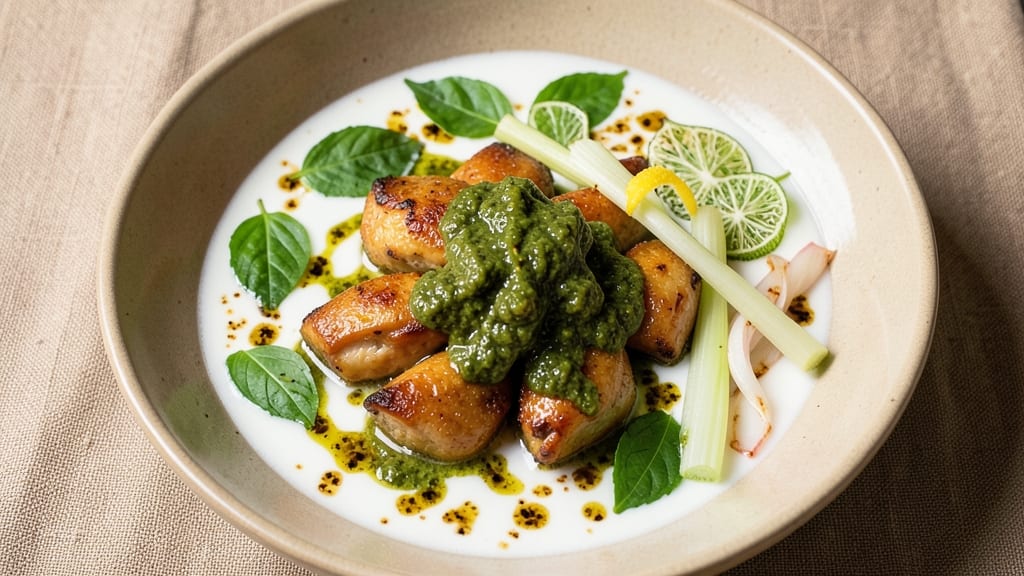
This authentic Thai green chicken curry recipe delivers the complex, fragrant balance of basil and kaffir lime leaves that defines Thai cuisine. The secret lies in layering flavors—sweet, sour, and spicy—through carefully toasted green curry paste, coconut milk, and fresh herbs.
I’ve perfected this dish over years of testing, ensuring every bite captures the soul of a Bangkok street-side stall.
The process begins with marinating chicken in a fragrant blend of lemongrass, galangal, and garlic, then simmering it in a rich coconut broth infused with green curry paste and kaffir lime leaves.
This isn’t just a curry—it’s a symphony of textures and aromas, where tender chicken absorbs the vibrant, aromatic sauce. The result? A dish that’s both deeply comforting and undeniably authentic.
What sets this recipe apart is the attention to detail: balancing heat with sweetness, sour with richness, and ensuring the basil and kaffir lime leaves shine without overpowering. The sauce should be velvety yet vibrant, clinging to the chicken and rice in perfect harmony.
Serve it with fragrant jasmine rice and steamed greens for a meal that feels like a culinary journey.
This version stays true to tradition while offering flexibility—adjust the spice level to your taste, or swap chicken for tofu for a vegetarian twist. The techniques here are straightforward, but the flavors are anything but ordinary. Let’s bring the heart of Thailand to your kitchen.
Ingredients for authentic thai green chicken curry
These vibrant ingredients bring Bangkok street flavors to your kitchen table.
| Ingredient | Amount | Notes |
|---|---|---|
| Boneless Chicken Thighs 🍗 | 1 ½ lb | Cut into 1-inch pieces |
| Green Curry Paste 🌶️ | ¼ cup | Store-bought or homemade |
| Coconut Milk 🥥 | 1 can | Full-fat, 13.5 oz can |
| Fresh Thai Basil Leaves 🌿 | ½ cup | Packed, stems removed |
| Kaffir Lime Leaves 🍋 | 4 whole | Torn into strips |
| Lemongrass Stalk 🌱 | 1 whole | Bruised, cut into 2-inch pieces |
| Galangal Slice 🥔 | 1 piece | About 2 inches thick |
| Garlic Cloves 🧄 | 6 cloves | Peeled, smashed |
| Shallots 🧅 | 3 whole | Peeled, quartered |
| Fish Sauce 🍶 | 1 tbsp | Red Boat preferred |
| Palm Sugar 🍯 | 2 tbsp | Or light brown sugar |
| Lime Juice 🍋 | 2 tbsp | Freshly squeezed |
| Vegetable Oil 🫒 | 2 tbsp | For stir-frying |
| Salt 🧂 | 1 tsp | Kosher or sea salt |
| Black Pepper 🌶️ | ½ tsp | Freshly ground |
The curry paste is non-negotiable—Maesri or Maesri Thai Kitchen are my go-tos, but any quality brand works. If you can't find kaffir lime leaves, Asian markets usually have them fresh or dried. Galangal? It's that root that looks like ginger but smells like a mix of citrus and pepper. Substitute extra ginger if needed—it won't be identical but keeps the dish going. Fresh Thai basil is a game-changer, but regular basil in a pinch (though it won't be the same). For the chicken, thighs stay juicier than breasts during the long simmer.
No fish sauce? Soy sauce plus a pinch of sugar gets you close, but the umami won't be quite right. Palm sugar hard to find? Light brown sugar works perfectly. Want to dial back the heat? Reduce the curry paste to 2 tablespoons and add 1/2 teaspoon of sugar to balance. The coconut milk can be swapped for light coconut milk, but the sauce will be less rich. For extra authenticity, toast the curry paste in the oil for 2-3 minutes before adding liquids—this deepens the flavors dramatically. And if your lime juice isn't fresh, bottled lime juice with a pinch of salt works in a bind.
This curry tastes even better the next day as flavors meld. Keeps for 4 days in the fridge, or freeze portions for 3 months. I always make a double batch—one for dinner, one for leftovers that become the next day's lunch. The sauce thickens as it cools, so a splash of water or coconut milk brings it back to perfect consistency. Store the curry paste in the freezer to keep it potent for months.
Why You'll Love This Recipe
- One-Pot Magic: I swear by this recipe—just chicken, curry paste, coconut milk, and a handful of herbs tossed into one pot. No fancy gadgets, no stress, and the flavors meld together while you sip your drink.
- Herb-Packed Punch: That green curry paste isn’t just spicy—it’s layered. The kaffir lime leaves add a citrusy brightness, while the Thai basil finishes with a fresh, almost floral note. Honestly, the first time I tasted it, I almost burned my mouth just to feel it.
- Leftovers That Beg: This curry tastes better the next day. I’ll be real: I make a big batch, freeze half, and still eat the rest within 48 hours. The coconut milk thickens just enough to coat every bite, and the chicken stays tender—no dry, sad leftovers here.
- Budget-Friendly Luxury: Fresh Thai basil and kaffir lime leaves might sound fancy, but a few stems go a long way. Chicken thighs are forgiving and cheap, and coconut milk is the ultimate pantry hero. It’s restaurant-quality without the price tag—my wallet thanks me every time.
Step-by-Step instructions for authentic Thai green chicken curry
Here's how to build a curry that balances heat, sweetness, and aromatic herbs just like Thai street stalls do.
Prepare the Chicken and Aromatics
Cut the 1.5 lb boneless chicken thighs into 1-inch pieces and set aside. In a small bowl, combine the 6 cloves garlic, 3 whole shallots, 1 piece galangal slice, and 1 whole lemongrass stalk (cut into 2-inch pieces). Using a mortar and pestle or the flat side of a knife, bruise these ingredients until they release their oils and aromas—this is where the magic happens. The galangal should smell citrusy and peppery, while the lemongrass will perfume the air.
Heat the 2 tbsp vegetable oil in a heavy-bottomed pot over medium heat. Add the bruised aromatics and cook for 3-4 minutes until fragrant but not browned. This step builds the aromatic base that carries through the entire dish. If the aromatics start to brown too quickly, reduce the heat slightly—you want them to soften, not char.
Develop the Curry Paste Foundation
Add the 0.25 cup green curry paste to the pot and stir constantly for 2-3 minutes over medium-low heat. The paste will darken slightly as it blooms, releasing its complex flavors of lemongrass, galangal, and chili. This is the moment that matters: the paste should coat the back of a spoon with a thick, oily consistency. If it sticks to the pot, add 1-2 tablespoons of water to help it release its flavors.
Here's the thing—don't rush this step. The green curry paste contains raw chili and shallots that need time to soften and mellow. If you cook it too quickly, you'll end up with a bitter, harsh curry. You'll know it's ready when the paste loses its raw smell and takes on a deeper, earthier aroma.
Simmer the Chicken in Coconut Milk
Pour in the 1 can coconut milk and stir well to combine with the paste. Bring the mixture to a gentle simmer, then add the 1-inch chicken pieces. Partially cover the pot and simmer for 15-20 minutes over medium-low heat, stirring occasionally. The chicken should cook just until it's no longer pink in the center—it'll finish cooking in the residual heat later.
Real talk: the chicken should float just below the surface of the coconut milk. If it's too crowded, cook it in batches to avoid steaming. You want the curry to simmer gently so the coconut milk doesn't separate or curdle. If you see any oil separating, stir vigorously to re-emulsify it.
Balance Flavors with Sweet and Sour
Once the chicken is cooked, stir in the 2 tbsp palm sugar, 1 tbsp fish sauce, 2 tbsp lime juice, 1 tsp salt, and 0.5 tsp black pepper. Taste the curry and adjust the balance—you're aiming for a harmonious mix of sweet, salty, sour, and spicy. The fish sauce adds umami depth, while the lime juice brightens everything up. If it needs more heat, add a pinch of red pepper flakes or a splash more fish sauce.
Simmer uncovered for another 5 minutes to let the flavors meld. The curry should coat the back of a spoon with a velvety texture. If it's too thick, add 2-3 tablespoons of water to reach your desired consistency. The goal is a sauce that's rich but still clings to the chicken rather than being heavy.
Finish with Fresh Herbs
Remove the pot from heat and stir in the 0.5 cup fresh Thai basil leaves and 4 whole kaffir lime leaves (torn into strips). The basil should wilt slightly as it absorbs the curry's flavors, while the kaffir lime leaves add a bright, citrusy aroma. Let the curry sit off the heat for 5 minutes to allow the herbs to infuse fully.
Serve the green chicken curry immediately over steamed jasmine rice, garnished with additional Thai basil leaves and lime wedges. The contrast of the fragrant, slightly sweet curry with the mild rice is what makes this dish so satisfying. Each bite should deliver tender chicken, creamy coconut milk, and layers of aromatic herbs—just like the curries you'd find at a bustling Thai market.
Pro Tips For Making Authentic Thai Green Chicken Curry
- Bloom the paste first: Sauté the green curry paste in oil for 2-3 minutes before adding anything else—this releases its flavors and prevents a raw, bitter taste. I used to skip this and wondered why my curry always tasted underdeveloped; now I never rush it.
- Cut chicken into even chunks: Trim the chicken thighs into 1.5-inch pieces so they cook uniformly—no tiny bits that turn rubbery or large hunks that stay tough. My grandmother swore by this, and she was right: consistency matters more than you’d think.
- Simmer, don’t boil: Once the coconut milk is added, keep the heat at a gentle simmer (tiny bubbles, not rolling) to avoid breaking the milk into a greasy mess. After burning three batches, I finally figured out that patience here saves cleanup later.
- Toast the basil at the end: Add the Thai basil and kaffir lime leaves in the last 5 minutes of cooking—just until they wilt slightly. This keeps their bright aroma intact instead of letting them stew into oblivion. Sounds weird, but it works: the dish tastes fresher, not cooked-out.
Creative variations of authentic thai green chicken curry
Bangkok Street Style
For an authentic Bangkok experience, add 1 tbsp tamarind paste when balancing flavors in Step 4—it deepens the sour note that defines street-side curries. I like to finish with a sprinkle of crushed peanuts (about 2 tbsp) and Thai red chili flakes for texture and heat.
Serve with pandan-infused jasmine rice for that extra aromatic punch. 🌶️
Northern Thai Adaptation
In Thailand's northern regions, this curry often includes pork shoulder instead of chicken—swap the thighs for 1.5 lb pork and simmer for 30-40 minutes until fork-tender. Add 1 stalk lemongrass and 1 tbsp soy sauce to the marinade. The pork absorbs flavors differently, creating a richer, heartier dish. 🥓
Vegetarian Swap
For a plant-based version, replace chicken with 1.5 lb extra-firm tofu (pressed and cubed) or 1 lb king oyster mushrooms. Simmer the tofu for 10 minutes before adding coconut milk to prevent breaking.
Boost umami with 1 tbsp soy sauce and 1 tsp miso paste—this mimics the savory depth of fish sauce. The mushrooms add a meaty texture that works beautifully. 🌱
Spicy Heat Boost
For maximum heat, add 1-2 Thai bird's eye chilies (seeds removed) when sautéing the curry paste in Step 2. If you want smoky depth, char the chilies in a dry pan for 30 seconds before adding.
For a balanced kick, reduce coconut milk to ½ can and add ¼ cup chicken stock to maintain sauce consistency. 🔥
Creamy Coconut Twist
For a richer sauce, blend ½ cup coconut cream (the thick part from a can of coconut milk) with 1 tbsp lime juice and stir into the curry in Step 4.
This creates a luxurious, almost velvety texture while keeping the dish authentically Thai. Pair with steamed bok choy for a perfect balance of textures. 🥥
Make-Ahead Magic
This curry tastes even better the next day as flavors meld. Let it cool completely, then store in an airtight container in the fridge for up to 4 days. Reheat gently on low heat with 2 tbsp coconut milk to restore creaminess.
For freezing, portion into single-serving containers and freeze for up to 3 months. Thaw overnight in the fridge before reheating. ✨
Nutrition facts
Frequently asked questions
What makes this green chicken curry authentically Thai?
The key lies in the green curry paste, kaffir lime leaves, and Thai basil—ingredients that create the signature aromatic balance. The paste must be toasted properly to develop its flavors, and the herbs are added at the end to preserve their freshness. Traditional Thai curries also balance sweet (palm sugar), sour (lime juice), and spicy (chilies) elements, which this recipe achieves perfectly.
Can I substitute regular basil for Thai basil?
Yes, but it won't be authentically Thai. Thai basil has a distinct anise-like flavor and bright green color that regular basil lacks. If you can't find Thai basil, use holy basil (another Thai variety) or regular basil with a pinch of anise seeds added to the sauce. The texture and aroma will differ, but it'll still be delicious.
Why does my curry sauce separate when simmering?
This happens when coconut milk breaks down due to too much heat or stirring too vigorously. To fix it, reduce the heat to low and stir gently while adding 1-2 tablespoons of water to help re-emulsify. For prevention, always simmer on medium-low heat and avoid boiling. The sauce should be creamy, not oily or grainy.
How can I adjust the spice level?
Start with ¼ cup green curry paste for mild heat, then increase to ⅓ cup for medium, or ½ cup for spicy. For extra kick, add 1-2 sliced Thai bird's eye chilies (seeds removed) when sautéing the paste. Balance with palm sugar or lime juice if the heat becomes overwhelming. Taste as you go!
What's the best way to store leftovers?
Let the curry cool completely, then store in an airtight container in the fridge for up to 4 days. Reheat gently on low heat with 2 tbsp coconut milk to restore creaminess. For freezing, portion into single servings and freeze for 3 months. Thaw overnight in the fridge before reheating. The flavors actually improve after resting!