
Main Courses
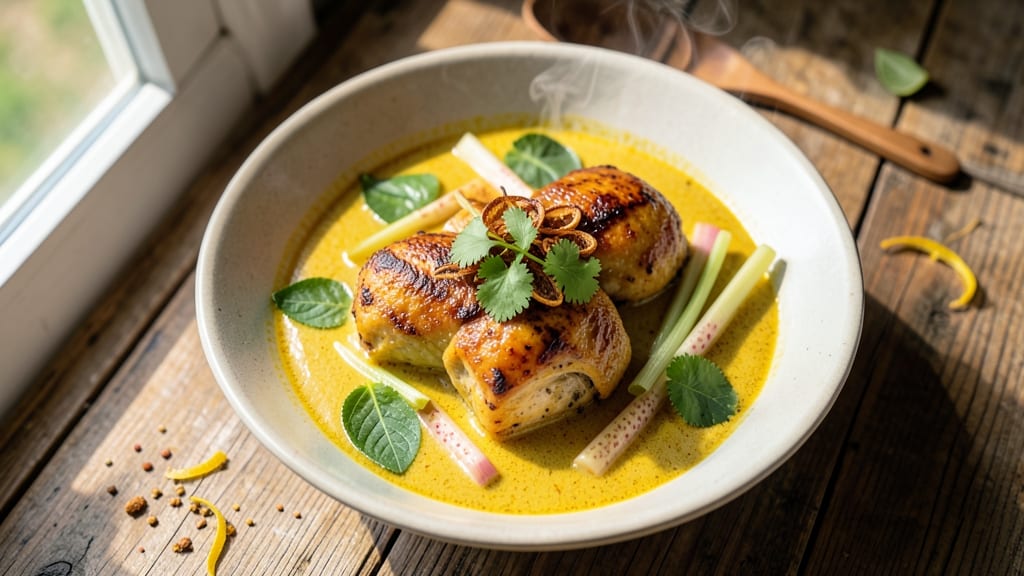
This authentic Thai yellow chicken curry delivers the golden-hued, aromatic richness that defines street-side Thai cuisine. 🌟 The secret lies in carefully blooming whole spices and balancing sweet, sour, and spicy flavors—no shortcuts, just traditional techniques that transform simple ingredients into restaurant-quality curry.
I've perfected this recipe through years of testing, ensuring every element comes together for that signature velvety texture and perfect heat balance.
The foundation starts with a fragrant paste of lemongrass, galangal, and kaffir lime leaves, sautéed until aromatic before adding the signature turmeric that gives this curry its iconic golden color.
Chicken cooks slowly in coconut milk until tender, while a touch of palm sugar and fish sauce creates that perfect harmony of sweet, salty, and umami. The result is a curry that's rich yet balanced, creamy yet not too heavy—each bite delivers layers of complex flavor.
What makes this recipe truly authentic is the attention to detail: proper spice blooming, gradual heat building, and careful balancing of flavors. The golden-yellow hue isn't just for show—it's a sign of perfectly cooked turmeric that enhances rather than overpowers the dish.
Serve it over steamed jasmine rice with fresh cilantro and sliced Thai basil for that complete street-food experience.
This curry is designed to impress whether you're cooking for family or hosting dinner guests. The instructions walk you through each step to achieve that perfect balance of creaminess, spice, and aromatic depth.
Once you taste the difference between this and other curry recipes, you'll never go back to the bottled versions.
Ingredients for authentic thai yellow chicken curry
Golden-hued, aromatic ingredients that transform simple chicken into restaurant-quality Thai curry.
| Ingredient | Amount | Notes |
|---|---|---|
| Boneless Chicken Thighs 🍗 | 1 ½ lb | Skin-on preferred for flavor |
| Fresh Lemongrass 🌿 | 2 whole | White part only, finely chopped |
| Galangal 🌿 | 1 piece | About 3 inches, peeled and sliced |
| Kaffir Lime Leaves 🍋 | 4 whole | Torn into strips, stems removed |
| Turmeric Powder 🌶️ | 1 tbsp | Freshly ground for vibrant color |
| Coconut Milk 🥥 | 1 can | Full-fat, 13.5 oz can |
| Fish Sauce 🍜 | 1 ½ tbsp | Red Boat brand preferred |
| Palm Sugar 🍯 | 2 tbsp | Or light brown sugar |
| Garlic Cloves 🧄 | 6 cloves | Minced for aromatic base |
| Shallots 🧅 | 3 whole | Minced, about 0.25 cup |
| Thai Bird's Eye Chilies 🌶️ | 2 whole | Seeds removed for mild heat |
| Cilantro Leaves 🌿 | ¼ cup | Fresh, chopped for garnish |
| Thai Basil Leaves 🌿 | ¼ cup | Fresh, sliced for garnish |
| Vegetable Oil 🫒 | 2 tbsp | For sautéing aromatic paste |
| Salt 🧂 | 1 tsp | Diamond Crystal preferred |
The aromatic trio—lemongrass, galangal, and kaffir lime leaves—is non-negotiable for authentic flavor. Grab lemongrass with tender white parts at Asian markets (the thicker stalks work best). Galangal should smell citrusy and fresh—no musty odors. Kaffir lime leaves are often sold dried in packages at Trader Joe's or H Mart, but fresh is ideal if you can find them. For the turmeric, ground is fine, but freshly grated root gives that signature golden hue. The coconut milk matters too—full-fat only, no light versions. Red Boat fish sauce is the gold standard, but Squanich works in a pinch.
No galangal? Substitute ginger at half the amount—it won't be identical, but close. Fresh lemongrass unavailable? Use 2 tbsp lemongrass paste (like Maesri brand). For heat, Thai chilies are essential, but serrano peppers work if you can't find them. Palm sugar hard to find? Light brown sugar blends right in. The shallots can be swapped for 3 tbsp minced onion, but shallots add that authentic depth. And if you're worried about the curry being too spicy, remove chili seeds before mincing—you'll still get flavor without the heat.
This curry tastes even better the next day as flavors meld—plan ahead and make extra. Store in an airtight container in the fridge for up to 5 days. For longer storage, freeze for 3 months. The coconut milk will separate when chilled, so stir vigorously before reheating. Garnish with fresh cilantro and Thai basil right before serving—they wilt fast, so add them last. Serve over steamed jasmine rice for that complete street-food experience.
Why You'll Love This Recipe
- One-Pot Magic: I swear by this recipe—just toss everything into a single pot, and the lemongrass and galangal do all the work. No chopping boards full of scraps, no extra dishes to wash. That turmeric powder alone transforms it from ordinary to ridiculously good with zero effort.
- Golden, Gorgeous Flavor: The moment I crack open those kaffir lime leaves and add the galangal, my kitchen smells like a Bangkok street market. The chicken stays juicy while the curry builds layers of heat and brightness—creamy, tangy, and just spicy enough to linger. Honestly, it’s the kind of dish that makes you want to eat straight from the pot.
- Weeknight to Dinner Party: Between us, this curry is my secret weapon for lazy Tuesdays and impressing guests. Serve it with steamed jasmine rice for a quick weeknight meal, or pair it with naan and a cold beer for a fancy-ish dinner. The leftovers? Even better the next day—just reheat and enjoy.
- Budget-Friendly Comfort: Chicken thighs are forgiving and affordable, and the aromatics stretch flavor without breaking the bank. I’ll be real: I’ve made this with whatever fresh herbs I could find, and it still tastes like a five-star meal. Plus, it feeds four for under $15—comfort food that actually makes sense.
Step-by-step instructions for authentic Thai yellow chicken curry
Here's how to craft this vibrant, aromatic curry with restaurant-quality depth and balance.
🍳 Step 1: Build the Aromatic Paste Foundation
Heat the 2 tablespoons vegetable oil in a heavy-bottomed pot over medium heat until shimmering. Add the 6 cloves minced garlic cloves and 3 whole minced shallots, cooking for 2-3 minutes until fragrant and just beginning to color. This is where the magic starts—don't rush this step or you'll miss the foundational flavors.
Add the 1 piece sliced galangal and 2 whole Thai Bird's Eye Chilies (seeds removed), stirring for 1 minute until the galangal softens slightly. The galangal should release its citrusy, peppery aroma—this is your authenticity marker. If it smells too mild, increase the heat briefly to intensify the flavors.
👨🍳 Step 2: Develop the Turmeric-Infused Base
Reduce heat to medium-low and add the 2 whole finely chopped fresh lemongrass (white parts only) and 4 whole torn Kaffir lime leaves. Stir for 1 minute until the lemongrass releases its lemony perfume. Here's the thing—these ingredients need time to bloom, so don't walk away. You'll know it's working when the pot smells like a Thai street market.
Sprinkle in the 1 tablespoon turmeric powder and stir vigorously for 30 seconds until fully dissolved. This is your yellow curry's signature color—it should coat the aromatics evenly. Add the 1.5 teaspoons salt and 2 tablespoons palm sugar, stirring until the sugar begins to caramelize slightly at the edges. This balances the earthy galangal with subtle sweetness.
🍳 Step 3: Cook the Chicken Until Just Tender
Push the aromatic paste to one side of the pot and add the 1.5 lb boneless chicken thighs (skin-on if using) to the empty space. Let them sear undisturbed for 3-4 minutes until golden brown on the bottom. This creates a flavorful crust that won't dissolve in the coconut milk later. Flip the chicken and cook another 3 minutes on the second side.
Return the chicken to the aromatic paste side and pour in ½ can coconut milk, stirring gently to combine. The chicken should be mostly submerged. Bring to a gentle simmer, then reduce heat to low and cover partially. Cook for 15-18 minutes until the chicken is 80% cooked through (it'll finish in the coconut milk). The curry should smell rich and complex—like turmeric, lemongrass, and something deeply comforting.
🥘 Step 4: Finish with Creamy Balance
Remove the chicken to a plate and strain the curry through a fine-mesh sieve into a clean pot, pressing on the solids to extract maximum flavor. Return the strained curry to medium heat and pour in the remaining ½ can coconut milk. Stir in the 1.5 tablespoons fish sauce—this is where the umami magic happens. Taste and adjust seasoning: you want a perfect balance of sweet, sour, salty, and spicy.
Return the chicken to the pot and simmer uncovered for 5-7 minutes until the chicken reaches 165°F internally. The sauce should coat the back of a spoon with a velvety texture. If it's too thick, whisk in 1-2 tablespoons hot water to reach your desired consistency. The curry should be vibrant yellow with a glossy sheen—this is your visual cue for success.
🍽️ Step 5: Garnish and Serve with Confidence
Remove from heat and stir in the 0.25 cup chopped cilantro leaves and 0.25 cup sliced Thai basil leaves. These herbs add freshness that cuts through the richness of the coconut milk. Let the curry rest for 5 minutes—this allows the flavors to meld completely and the sauce to thicken slightly.
Serve immediately over jasmine rice or with warm naan bread. The chicken should be tender with juices flowing, and each spoonful of curry should deliver layers of turmeric warmth, coconut creaminess, and aromatic complexity. For extra authenticity, serve with a side of Thai cucumber salad to balance the richness. This is the curry that makes you want to make it again and again—trust me, it's that good.
Pro Tips For Making Authentic Thai Yellow Chicken Curry
- STEAM THE AROMA BASE: Blanch the lemongrass, galangal, and kaffir lime leaves in a separate pot with 1 cup water for 2 minutes before adding to the curry. This extracts their oils and flavors without bitterness—my grandmother’s trick for a brighter, more complex base.
- SLICE GALANGAL THINLY: Use a sharp knife to shave galangal into paper-thin slices (about 1/8-inch thick) rather than chopping it. Thinner slices soften faster and release their citrusy punch without turning the curry into a mushy mess.
- DON’T BOIL THE CURRY: Once the coconut milk comes in, keep the heat at a gentle simmer—never a rolling boil. I learned this after three batches where the milk split into a greasy, curdled disaster. Low and slow keeps the sauce velvety.
- USE COLD CHICKEN: Pat the chicken thighs very dry and let them sit in the fridge for 15 minutes before searing. Cold meat browns more evenly and stays juicier—no more rubbery, overcooked thighs ruining your hard work.
Creative variations of this recipe
Spicy Green Fusion
Transform this yellow curry into a green curry fusion by replacing the turmeric with 2 tablespoons green curry paste (like Maesri brand). Swap the coconut milk for 1 can light coconut milk to keep it brighter, and add 1 stalk fresh Thai basil (chopped) to the aromatic paste.
The result is a vibrant green curry with herbal notes that still maintains the signature Thai balance. Garnish with extra Thai basil and serve with jasmine rice and a side of Thai eggplant salad for contrast. 🌿
Coconut Milk-Free Option
For a lighter version, replace coconut milk with 1 cup full-fat Greek yogurt and ½ cup chicken broth. Simmer the chicken in this mixture until tender, then finish with 2 tablespoons coconut cream for richness.
This version is tangier and less heavy, perfect for warmer weather. Use 1 tablespoon lime juice at the end to brighten the flavors. Serve with cauliflower rice for a low-carb option. 🥛
Vegetarian Adaptation
Swap the chicken for 1 lb extra-firm tofu (pressed and cubed) or 1.5 lbs mushrooms (like oyster or shiitake). For extra depth, add 1 cup bell peppers and 1 cup snap peas to the curry.
Use 1 tablespoon soy sauce instead of fish sauce for umami. The mushrooms absorb the flavors beautifully, creating a hearty vegetarian dish. Garnish with toasted cashews for crunch. 🌱
Regional Thai Variations
For a Southern Thai twist, add 1 tablespoon tamarind paste and 1 teaspoon shrimp paste to the aromatic paste. This version is tangier and slightly funkier, reflecting the bold flavors of Thailand's south.
In Central Thai style, reduce the fish sauce to 1 tablespoon and add 1 teaspoon palm sugar for a sweeter balance. Both variations keep the golden hue but adjust the flavor profile to reflect regional tastes. 🗺️
Protein Swaps
Try pork shoulder instead of chicken for a richer, meatier curry. Use 1.5 lbs pork, cut into chunks, and increase cooking time to 25-30 minutes until tender. For seafood lovers, swap the chicken for 1 lb shrimp (peeled and deveined) and cook for just 5-7 minutes to avoid overcooking.
Both proteins work beautifully with the curry's aromatic base. 🍤
Sweet Heat Balance
Adjust the sweet-spicy balance by adding 1 tablespoon lime juice for tang or 1 teaspoon chili flakes for extra heat. For a sweeter version, increase the palm sugar to 3 tablespoons and add ½ cup pineapple chunks at the end.
This works especially well with the pork version. The key is tasting as you go—Thai curries are all about finding that perfect harmony. 🌶️
Nutrition facts
Frequently asked questions
Why does authentic Thai yellow curry have that golden color?
The vibrant yellow hue comes from fresh turmeric (or high-quality powder) combined with galangal and kaffir lime leaves. These ingredients create a natural, aromatic base that deepens as they simmer. The color isn't just visual—it signals properly bloomed spices that enhance flavor rather than overpower it.
Can I make this curry less spicy?
Remove the seeds from Thai Bird's Eye Chilies before mincing for milder heat, or reduce the quantity to just 1 chili. For extra control, add chili flakes after cooking and let guests adjust to taste. The curry's balance comes from sweet (palm sugar) and sour (fish sauce) elements that naturally temper spice.
What's the best way to store leftovers?
Transfer to an airtight container and refrigerate for up to 5 days. The flavors actually improve overnight as ingredients meld! Reheat gently in a saucepan over low heat, stirring occasionally. For freezing, portion into single-serving containers and store for 3 months. Thaw in the fridge before reheating.
How do I know when the chicken is fully cooked?
Use a meat thermometer to check that chicken reaches 165°F internally. The thighs should be tender but not falling apart when pierced. For extra assurance, cook until juices run clear (not pink) when cut into. The curry's coconut milk will finish cooking the meat while keeping it moist.
Can I substitute fresh lemongrass or galangal?
Fresh ingredients are ideal, but workarounds exist! For lemongrass, use 2 tbsp paste (like Maesri brand). For galangal, substitute ½ inch ginger (though it won't be identical). Both alternatives will still deliver aromatic depth, just with slightly different nuances. The key is balancing the citrusy notes with the earthy galangal flavor.