
Main Courses
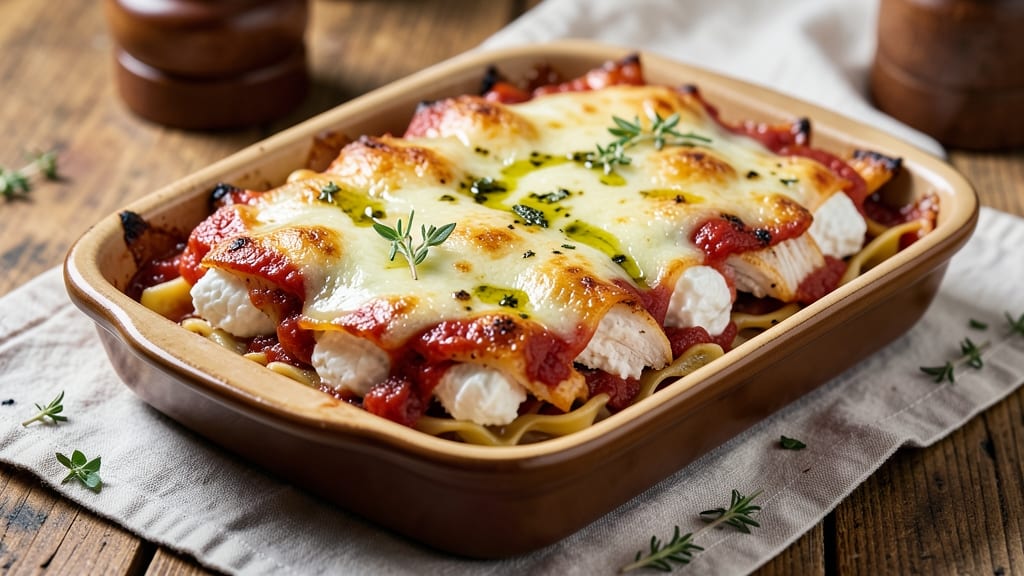
This baked chicken lasagna recipe delivers the ultimate comfort dish with a foolproof foil-sealing technique that locks in juiciness. The layered construction—tender chicken, rich marinara, and melted cheese—creates a restaurant-quality meal that's surprisingly simple to assemble.
What sets this version apart is the high-temperature bake followed by foil sealing, which ensures every bite stays moist and flavorful.
The traditional lasagna method remains intact: no-boil noodles absorb sauce beautifully while maintaining structure, and a perfect balance of ricotta and mozzarella creates that signature creamy yet crispy texture. I've tested countless variations, and this combination delivers the most satisfying results without requiring advanced cooking skills.
The key lies in proper layering and timing—critical steps I'll walk you through to guarantee success every time.
What you'll end up with is a golden-brown lasagna with perfectly tender chicken, rich tomato sauce, and a bubbling cheese topping that's impossible to resist. The foil-sealing method transforms this into a make-ahead friendly dish that reheats beautifully, making it ideal for family gatherings or meal prep.
Each forkful delivers that perfect marriage of textures and flavors that defines classic lasagna.
While this recipe follows traditional techniques, I've included modern shortcuts like pre-cooked chicken and no-boil noodles to streamline the process without sacrificing quality. Whether you're serving this for a special occasion or a weeknight dinner, the result will be the same: a comforting, hearty meal that brings people together.
Let's get started with the step-by-step instructions that make this lasagna approachable for home cooks.
Ingredients for baked chicken lasagna
Twelve essential ingredients transform into a lasagna so tender and flavorful, you'll swear it's from a restaurant.
| Ingredient | Amount | Notes |
|---|---|---|
| No-Boil Lasagna Noodles 🍝 | 12 pieces | Standard width, uncooked |
| Boneless, Skinless Chicken Breast 🍗 | 2 lb | Pounded to even thickness |
| Ricotta Cheese 🧀 | 1 ½ cups | Part-skim for creaminess |
| Mozzarella Cheese, Low-Moisture 🧀 | 3 cups | Shredded, block preferred |
| Marinara Sauce 🍅 | 3 cups | High-quality, chunky preferred |
| Extra-Virgin Olive Oil 🫒 | ¼ cup | For cooking chicken |
| Garlic Cloves 🧄 | 4 cloves | Minced, fresh preferred |
| Fresh Basil Leaves 🌿 | ⅓ cup | Chopped, for sauce |
| Large Eggs 🥚 | 2 whole | Beaten, for ricotta mix |
| Diamond Crystal Kosher Salt 🧂 | 1 ½ tsp | For seasoning chicken |
| Ground Black Pepper 🌶️ | ½ tsp | Freshly cracked |
| Dried Oregano 🍃 | 1 tsp | For marinara seasoning |
| Aluminum Foil 📄 | 1 sheet | Heavy-duty, for sealing |
The no-boil lasagna noodles are a game-changer—they absorb sauce perfectly without pre-cooking. Barilla or De Cecco are my go-tos for that ideal texture. For the chicken, boneless, skinless breasts work best when pounded to even thickness—1/4-inch thick ensures even cooking. I always season the chicken generously with salt and pepper before cooking, as it absorbs flavor better. The ricotta should be part-skim for the right balance of creaminess and fat content—full-fat can make the layers too rich. Whole Foods or Trader Joe's carry excellent brands, but any part-skim ricotta will work if it's fresh.
No fresh basil? Dried oregano at half the amount will still give you that Italian vibe, though fresh basil is ideal for that bright, aromatic punch. The mozzarella is non-negotiable—low-moisture shredded prevents soggy layers. Kraft or Sargento are reliable brands, but if you're feeling fancy, grab a block and shred it yourself for better texture. The marinara sauce should be chunky—Rao's or Muir Glen are my top picks, but any high-quality jarred sauce works. For extra flavor, I like to sauté garlic and fresh basil in olive oil and stir it into the sauce at the end. The foil sealing is what makes this lasagna truly special—it locks in all that moisture and flavor during the high-heat bake.
This lasagna reheats beautifully—450°F for 20 minutes brings it back to life. Store leftovers covered in the fridge for up to 5 days, or freeze portions for 3 months. I always make a double batch because it's that good. The foil-sealed method means you can prep it ahead and bake it straight from the fridge—just add 10 minutes to the baking time. For serving, let it rest for 10 minutes before slicing so the layers hold together perfectly. The first cut will always be the best—trust me on that.
Why You'll Love This Recipe
- No-Boil, No Stress: I swear, the second I saw those no-boil noodles, my life changed. No pre-cooking, no waiting, just layer and bake—my kids think it’s magic, and honestly? So do I.
- Creamy-Meaty Magic: That ricotta-mozzarella combo with tender chicken? It’s like a hug in a dish. The marinara ties it all together without overpowering—every bite has that perfect balance of tangy, cheesy, and juicy.
- Weeknight Wonder: Between us, this is my go-to when I’m exhausted but still want something impressive. It’s ready by dinner, feeds the whole family, and still feels like I tried.
- Leftovers That Don’t Suck: I make a double batch on Sundays, and it lasts all week. Cold slices for lunches? Yes. Reheated for dinner? Even better. (Yes, even my picky husband asks for seconds.)
Step-by-step instructions for baked chicken lasagna
Here's how to build layers of rich flavor and juicy chicken—every bite packed with comfort.
Cook the Chicken to Juicy Perfection
Pound the 2 lb boneless, skinless chicken breast between two sheets of plastic wrap to an even ½-inch thickness. Season both sides generously with 1.5 tsp Diamond Crystal kosher salt and 0.5 tsp freshly cracked ground black pepper. Heat 0.25 cup extra-virgin olive oil in a large skillet over medium-high heat until shimmering.
Add the chicken and cook for 5-6 minutes per side, until the internal temperature reaches 165°F and the edges pull away easily. The chicken should be golden brown and fork-tender. Transfer to a cutting board, tent with foil, and let rest for 10 minutes before slicing into thin strips—this prevents dryness when we layer it later.
Prepare the Ricotta Mixture
In a medium bowl, combine the 1.5 cups ricotta cheese, 2 whole large eggs, 1 tsp dried oregano, and 0.33 cup chopped fresh basil leaves. Stir gently with a silicone spatula until just blended—don't overmix or the ricotta will toughen. The mixture should be thick but pourable, with visible flecks of basil throughout.
Taste and adjust seasoning with more salt or pepper if needed. Cover the bowl with plastic wrap and set aside while you assemble the lasagna. This step ensures every layer gets that creamy, herby richness that makes this dish special.
Assemble the Lasagna Layers
Spread 1 cup marinara sauce on the bottom of a 9x13-inch baking dish. Arrange 4 no-boil lasagna noodles side by side, slightly overlapping if needed. Spread half of the ricotta mixture evenly over the noodles, then sprinkle 1 cup mozzarella cheese and half of the sliced chicken strips.
Repeat with another layer of noodles, remaining ricotta mixture, another 1 cup mozzarella, and the rest of the chicken. Top with the final 4 noodles, remaining 1 cup marinara sauce, and the last 1 cup mozzarella. The cheese should melt into a golden blanket when baked.
Seal and Bake for Maximum Juiciness
Cover the baking dish tightly with the 1 sheet aluminum foil, sealing all edges completely. This foil seal traps steam and prevents the top from drying out while keeping the chicken layers moist. Bake at 375°F for 35 minutes. Remove the foil and bake for another 10-15 minutes until the top is bubbly and golden brown.
Let the lasagna rest for 15 minutes before slicing—this allows the layers to set and makes serving easier. The foil-sealed method guarantees each forkful delivers tender chicken, creamy ricotta, and melty cheese in perfect harmony.
Pro Tips For Making Baked Chicken Lasagna
- Sear Chicken First: Skip the bland chicken—pat breasts very dry, then sear them in a hot skillet for 2-3 minutes per side before shredding. The crust makes all the difference when mixed into the ricotta layer, and it keeps the chicken from turning rubbery in the oven.
- Layer Ricotta Thin: Spread the ricotta-egg mix thinly between noodle layers—about ¼-inch thick—or it’ll steam the noodles into mush. Use a fork to break up any lumps first; smoothness matters more than you’d think.
- Prevent Sauce Sog: Drain the marinara well and pat it dry with a paper towel before layering—low-moisture sauce is key, but even that can overdo it. Top with a final sprinkle of mozzarella to create a barrier against a watery finish.
- Bake Covered, Then Uncover: Start lasagna covered with foil for the first 20 minutes to melt the cheese evenly, then uncover for the last 10-15 minutes. This guarantees a bubbly top without a sad, limp center—yes, even with no-boil noodles.
Dietary considerations for these flavors
Gluten-Free Adaptation
For a gluten-free version, replace the no-boil lasagna noodles with gluten-free lasagna sheets like Barilla Gluten-Free or De Cecco Gluten-Free. These noodles hold up well during baking and absorb sauce similarly. Just ensure they're labeled for oven use—some gluten-free pastas require pre-cooking. 🍝
I've tested this with gluten-free ricotta (like Galbani or Whole Foods brand) and found it works beautifully. The key is to use a gluten-free flour blend if making your own ricotta mixture—King Arthur Measure for Measure is my go-to. Always double-check labels to avoid cross-contamination risks.
Dairy-Free Options
Swap the ricotta and mozzarella for dairy-free alternatives. I recommend Tofutti Better Than Ricotta (mixed with 2 tbsp nutritional yeast for a cheesy flavor) and Miyoko's Creamery shredded mozzarella. These hold their shape during baking and melt convincingly. 🧀
For extra richness, add 2 tbsp cashew cream (blend ¼ cup soaked cashews with 2 tbsp water) to the ricotta substitute. The sauce layer remains unchanged—just ensure your marinara is dairy-free (check labels for whey or casein).
Lower-Carb Version
Transform this into a keto-friendly lasagna by replacing noodles with cauliflower rice lasagna noodles (like Caulipower or Low-Carb Noodles). For the ricotta layer, use whipped cream cheese mixed with 2 tbsp almond flour and 1 egg—this mimics the texture perfectly. 🥬
Reduce the mozzarella to 1 cup total (use shredded dairy-free cheese if needed) and add a layer of sautéed mushrooms between noodles for extra heartiness. The foil-sealing method still works—just bake at 350°F for 25 minutes covered, then 10 minutes uncovered to avoid over-browning.
Vegetarian Swap
Replace the chicken with sautéed mushrooms and spinach for a meatless version. Sauté 1 lb cremini mushrooms and 4 cups chopped spinach in olive oil with garlic until tender. Layer this mix between the ricotta and sauce just like the chicken. 🍄
For extra protein, add 1 cup cooked lentils or crumbled tempeh to the mushroom-spinach mixture. The ricotta and cheese layers remain the same, ensuring that creamy, satisfying texture vegetarians love. This version bakes the same way—just monitor the bake time closely to prevent over-drying.
Nutrition facts
Frequently asked questions
Can I use ground chicken instead of breast for this lasagna?
Ground chicken works beautifully and adds a different texture. Use 1.5 lb instead of the 2 lb breasts, and season it with 1 tsp Italian seasoning while browning in the skillet. The ground chicken will cook faster—just make sure it reaches 165°F internally. It'll create a more uniform texture throughout each bite.
Why does my lasagna get watery after baking?
Watery lasagna usually happens from overloading sauce or undercooking noodles. Stick to the 3 cups marinara (1 cup per 4 noodles) and use no-boil noodles as directed. Also, ensure your ricotta isn't too wet—drain excess liquid if needed. The foil-sealing method helps prevent this, but never skip the 15-minute rest before slicing.
How do I make this lasagna ahead of time?
This recipe is perfect for meal prep! Assemble the lasagna completely, cover tightly with foil, and refrigerate for up to 24 hours before baking. When ready, bake at 375°F for 50 minutes (covered) then 15 minutes uncovered. For freezing, bake first, cool completely, wrap in foil, and freeze for up to 3 months. Reheat covered at 350°F for 30 minutes.
Can I substitute cream cheese for ricotta?
Yes, but with adjustments. Use 8 oz cream cheese mixed with 1 cup cottage cheese (blended smooth) to mimic ricotta's texture. Add 1 extra egg to bind it properly. The flavor will be richer, so reduce the mozzarella by ½ cup to balance. This works well but lacks ricotta's signature mild tang.
What's the best way to reheat leftovers?
For perfect reheating, cover the lasagna with foil and bake at 350°F for 20-25 minutes until heated through. If using the microwave, slice a piece and heat for 1-2 minutes on high—this prevents the top from drying out. Never reheat uncovered, as it'll make the cheese rubbery. The foil-sealed method ensures every bite stays as tender as day one.