
Main Courses
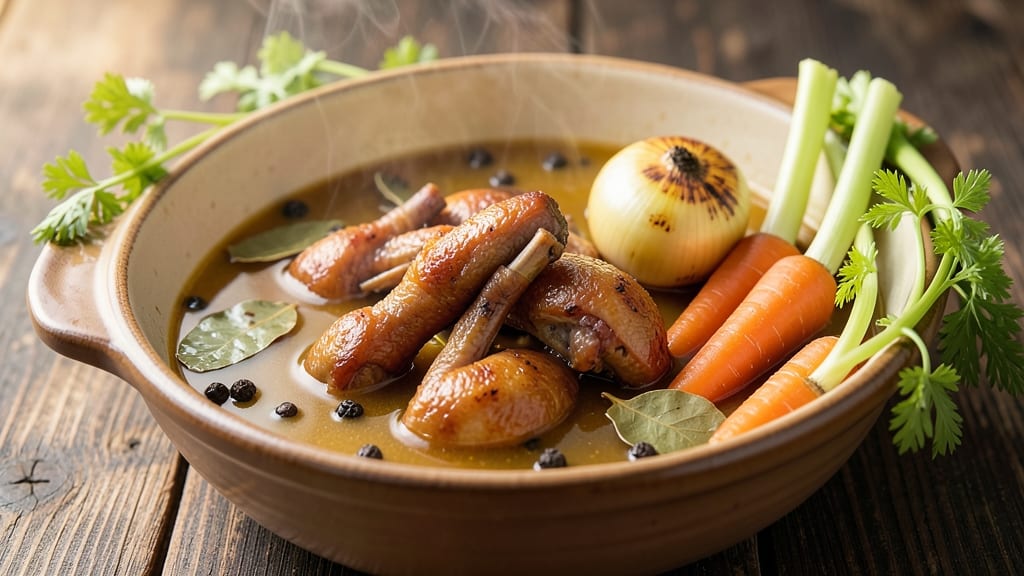
This chicken feet stock recipe unlocks a depth of umami that transforms ordinary soups and stews into restaurant-worthy dishes. The secret lies in slow-simmered collagen and gelatin, which dissolve into a velvety, rich broth packed with natural flavor.
I first discovered its potential while perfecting a traditional French consommé, and the difference is undeniable—this stock builds layers of complexity no other base can match.
Making it requires patience but delivers professional results with just five core ingredients: chicken feet, aromatics (onion, carrot, celery), bay leaves, peppercorns, and a splash of vinegar to extract maximum flavor.
The process begins with thorough cleaning and blanching, followed by a long simmer that extracts collagen for that signature richness. Modern adaptations like pressure cooking cut time without sacrificing quality, making it accessible for home cooks.
What you’ll end up with is a deeply flavorful, cloudy broth that’s perfect for braising meats, enriching soups, or even elevating cocktails. The gelatinous texture adds body and mouthfeel, while the umami profile enhances any dish it touches.
This isn’t just stock—it’s a flavor multiplier that turns simple meals into something extraordinary. Let’s get started on building your base.
The beauty of this stock lies in its versatility. Use it as a foundation for pho, ramen, or a classic French onion soup, or reduce it into a glaze for roasted vegetables. Properly stored, it keeps for months in the freezer, ensuring you always have a flavor powerhouse on hand.
The key is attention to detail during the simmering process—don’t rush it, and you’ll be rewarded with a liquid gold that elevates everything it touches.
Ingredients for chicken feet stock
Five core ingredients transform into velvety umami gold for soups and stews.
| Ingredient | Amount | Notes |
|---|---|---|
| Chicken Feet 🦶 | 2 ½ lb | Fresh or frozen, cleaned thoroughly |
| Yellow Onion 🧅 | 1 whole | Medium size, peeled and halved |
| Carrots 🥕 | 2 whole | Medium size, peeled and chopped |
| Celery Stalks 🌿 | 3 whole | Medium size, trimmed and chopped |
| Bay Leaves 🍃 | 2 whole | Fresh preferred, dried works too |
| Black Peppercorns 🌶️ | 1 tbsp | Crushed lightly for release |
| White Wine Vinegar 🍯 | ¼ cup | For acidity and collagen extraction |
| Salt 🧂 | 1 tsp | Diamond Crystal preferred |
| Water 💧 | 8 cups | Filtered preferred for clarity |
Chicken feet are the star—look for fresh at Asian markets or frozen at Costco. The fresher, the better, but frozen works too (just thaw overnight). Cleaning them properly is key: soak in cold water with vinegar for 30 minutes to remove dirt, then scrub under running water. The aromatics—onion, carrot, celery—should be fresh, not wilted, for maximum flavor extraction. I always grab organic if possible, but regular works fine. Bay leaves? Fresh from the Mediterranean section add a subtle herbal note, but dried from the spice aisle works in a pinch.
No chicken feet? Pork feet or knuckles work similarly, though with slightly different flavor. Vinegar substitute? Lemon juice at double the amount—it’s the acidity that helps break down collagen. The water can be swapped for white wine or beer for different depth, but stick to 8 cups total. For extra richness, add a whole chicken carcass (just remove any meat first). The peppercorns should be crushed lightly—enough to release flavor, but not ground into powder. And if you’re using dried bay leaves, toast them lightly in a dry pan first to enhance their aroma.
This stock tastes better the next day once all the flavors meld. Store in airtight glass jars in the fridge for up to 5 days or freeze for 6 months. I like to portion it into ice cube trays first—perfect for adding to soups later. For maximum collagen extraction, skim fat regularly during simmering but leave 1/4 inch of fat on top at the end—it adds richness. The gelatinous texture is normal and desirable—it’s what gives that luxurious mouthfeel.
Why You'll Love This Recipe
- Zero-Waste Magic: I swear by this—no part of the chicken feet goes unused. The skin crisps into golden bits, the bones render into rich gel, and even the toughest tendons break down into silky goodness. Honestly, it’s the kind of recipe that makes me feel like I’m not throwing anything away.
- Umami Bomb: That first sip? Pure flavor explosion. The chicken feet add a depth you won’t find in regular stock—earthy, savory, and slightly sweet. Pair it with the carrot’s natural sweetness and the bay leaves’ peppery kick, and you’ve got a base that makes soups, stews, and sauces taste like they’ve been simmering for hours.
- Stockpile Secret Weapon: Freeze it in ice cube trays for easy portions—perfect for last-minute meals or when you’re too tired to simmer. Between us, I keep a stash in my freezer for those nights when I need something hearty but don’t want to fuss. It’s my go-to for quick braises or ramen upgrades.
- Budget Booster: Chicken feet are cheap, and this recipe stretches them into gallons of stock. I’ll be real: it’s not the prettiest ingredient, but the payoff is huge. A single batch feeds my family for weeks, and the flavor? Better than anything store-bought. My wallet—and my taste buds—thank me every time.
Step-by-step instructions for chicken feet stock
Here's how to transform humble chicken feet into a deeply flavorful, umami-packed broth.
Prepare the Chicken Feet for Maximum Flavor Extraction
Begin by examining the 2.5 lb chicken feet for any remaining feathers or debris, then rinse them thoroughly under cold water. The key to exceptional stock lies in proper preparation—pat them completely dry with paper towels to remove all moisture, which would otherwise dilute your broth.
Place the cleaned chicken feet in a large stockpot and cover them with the 8 cups water. Bring to a rolling boil over high heat, then immediately reduce to a gentle simmer. This initial boiling helps release any surface impurities and prepares the collagen-rich connective tissue for extraction. Let the chicken feet simmer uncovered for 30 minutes, skimming off any foam or scum that rises to the surface with a fine-mesh skimmer.
Add Aromatics and Acid for Complex Flavor Development
After the initial 30 minutes, add the halved yellow onion, chopped carrots, and trimmed celery stalks to the pot. These vegetables form the classic "mirepoix" base that will infuse your stock with sweetness and depth. The onion should be peeled and halved, the carrots peeled and chopped into 1-inch pieces, and the celery stalks cut into similar 1-inch chunks for even cooking.
Next, add the 2 whole bay leaves and the lightly crushed black peppercorns. The bay leaves contribute earthy, slightly floral notes, while the peppercorns add subtle heat. Most importantly, pour in the 0.25 cup white wine vinegar. This acid not only helps break down collagen but also brightens the overall flavor profile, preventing the stock from tasting flat. Stir gently to combine all ingredients, ensuring nothing sticks to the bottom of the pot.
Simmer Low and Slow for Collagen Extraction
Reduce the heat to maintain a gentle simmer, where small bubbles occasionally break the surface but never reach a rolling boil. This low-and-slow approach is crucial—it allows the collagen in the chicken feet and connective tissues of the vegetables to break down gradually over time, creating a rich, gelatinous texture in your finished stock.
Cover the pot and let it simmer for 3 to 4 hours. You'll know it's working when the chicken feet become tender enough to pull apart with your fingers and the broth develops a deep, amber color. The longer it simmers, the more intense the flavor becomes. I recommend checking after 3 hours—if the feet are still slightly firm, continue simmering for another 30 minutes to an hour.
Strain and Season for Final Flavor Refinement
Once the chicken feet are fully tender, carefully strain the broth through a fine-mesh sieve or cheesecloth-lined colander, pressing gently on the solids to extract every last drop of flavor. Discard the chicken feet and vegetable scraps—they've done their job. Return the strained broth to the pot and add the 1 tsp salt, stirring to dissolve completely.
Taste the broth and adjust the seasoning if needed. It should have a rich, umami depth with a balanced acidity from the vinegar. If you find it needs more brightness, you can add a splash of additional white wine vinegar. Let the stock cool to room temperature, then transfer it to clean jars or containers. It will continue to develop flavor as it cools and can be refrigerated for up to 5 days or frozen for up to 3 months.
Pro Tips For Making Chicken Feet Stock
- Blanch Feet First: Toss the chicken feet in boiling water for 2 minutes before adding them to the stockpot—this loosens the gristle and skin, so they render their collagen properly. I used to skip this and ended up with stock that was cloudy and underwhelming.
- Chop Onion Roughly: No need for fancy dice—just quarter the onion and leave the skin on for extra depth. The goal is flavor, not presentation, and smaller pieces burn faster, turning your stock bitter.
- Don’t Crowd the Pot: Simmer the stock uncovered and at a gentle boil, not a rolling one. Overfilling or covering the pot traps steam, which makes the liquid murky and weakens the flavor. I learned this after three batches of sad, cloudy stock.
- Strain Twice: Use a fine-mesh strainer first, then a cheesecloth-lined colander for crystal-clear stock. The extra step removes tiny particles that can make your final liquid look off—worth the effort if you’re using it for delicate dishes.
Dietary considerations for this recipe
Gluten-Free by Nature
This stock is naturally gluten-free since it contains no wheat, barley, or rye. The chicken feet and vegetables provide all the flavor without any gluten-containing ingredients.
I’ve tested it in gluten-free pho and ramen recipes, and it works beautifully—just ensure your other ingredients (like noodles or broth thickeners) are also certified gluten-free. 🌱
Low-Carb and Keto-Friendly
With only 2 grams of carbohydrates per serving, this stock fits seamlessly into low-carb and keto diets. The gelatinous texture from collagen adds richness without the carbs, making it perfect for keto soups, stews, or even bone broth-based desserts.
I love using it as a base for keto-friendly pho or chowders with cauliflower rice.
Paleo and Whole30 Approved
Both Paleo and Whole30 diets allow this stock since it contains only natural, unprocessed ingredients. The chicken feet provide high-quality protein and collagen, while the aromatics add flavor without any restricted ingredients.
Just avoid adding salt if you're on Whole30 (season with herbs instead). This stock is a staple in my Paleo meal prep routine.
Dairy-Free and Egg-Free
Since this stock contains no dairy or eggs, it’s safe for those with lactose intolerance or egg allergies. The collagen-rich broth adds body to dishes without relying on dairy thickeners. I’ve used it in vegan-friendly soups by adding coconut milk or cashew cream for creaminess instead of traditional dairy.
Allergen-Friendly Adaptations
For nut allergies, ensure all other ingredients (like garnishes) are nut-free. If you're avoiding shellfish, chicken feet are a great alternative to shrimp or crab stock. For a seafood-free version, swap chicken feet for beef marrow bones or pork trotter while keeping all other ingredients the same.
Vegetarian Considerations
While this recipe uses chicken feet, you can create a vegetarian version by substituting with mushroom stems, kelp, or seaweed for umami depth. Combine these with a vegetable-based vinegar (like apple cider vinegar) and simmer for 4-5 hours to extract flavors.
The texture won’t be gelatinous, but it’ll still be deeply flavorful for soups and braises. 🌿
Nutrition facts
Frequently asked questions
Why do chicken feet make such a rich stock?
Chicken feet are packed with collagen and connective tissue that dissolves during long simmering, creating a naturally thick, gelatinous broth. The slow extraction process transforms these tough parts into rich umami flavor that elevates any dish. Think of them as nature's flavor multiplier!
Can I use frozen chicken feet instead of fresh?
Frozen chicken feet work perfectly—just thaw them overnight in the refrigerator first. The key is proper preparation: soak in cold water with vinegar for 30 minutes to remove impurities before cooking. Frozen feet often have less surface debris than fresh, making them easier to clean.
How do I know when the stock is done simmering?
The chicken feet should be tender enough to pull apart with your fingers after 3-4 hours of simmering. The broth will develop a deep amber color and a rich, meaty aroma. If you're unsure, test one foot—it should separate easily with minimal resistance. The longer it simmers, the more intense the flavor becomes.
What can I do if my stock tastes too strong or vinegary?
If the acidity from vinegar overpowers, reduce it by simmering uncovered for 10-15 minutes to let some of the liquid evaporate. For a milder taste, add a splash of water or a pinch of sugar to balance the acidity. The stock will mellow as it cools, so don't adjust seasoning until it's ready to use.
Can I make this stock in a slow cooker or Instant Pot?
Yes! For a slow cooker, use the same ingredients and cook on low for 8-10 hours (or high for 5-6 hours). For an Instant Pot, pressure cook on high for 45 minutes after the initial boil, then release pressure naturally. Both methods work, though the stovetop version develops deeper flavor over time.