
Main Courses
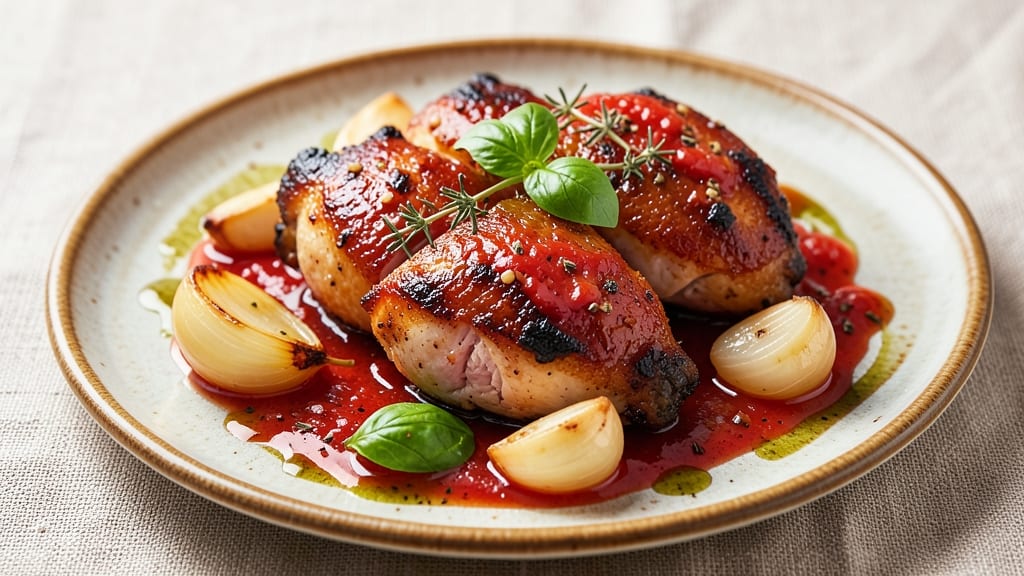
Chicken thighs with canned tomatoes transform simple pantry staples into a deeply flavorful, restaurant-worthy meal that simmers into perfection. This recipe proves you don’t need fresh tomatoes or hours of prep to create a sauce so rich and aromatic it’ll have everyone asking for seconds. The secret lies in proper browning and slow simmering—techniques that develop layers of flavor without requiring special ingredients.
What makes this dish truly special is its balance of textures and flavors: tender, juicy chicken thighs that fall apart slightly when cooked just right, paired with a deeply caramelized tomato sauce that’s tangy yet sweet.
The slow simmer allows the canned tomatoes to break down into a velvety consistency, while garlic and herbs infuse every bite with warmth. Best of all, this method works with any canned tomatoes—no fancy brands needed.
By the time you’re done, you’ll have a golden-brown, aromatic dish that’s ready to serve over pasta, with crusty bread, or alongside roasted vegetables. The sauce clings to the chicken like a second skin, creating a harmony of flavors that’s both comforting and sophisticated.
This is the kind of meal that feels like a labor of love without requiring one.
Whether you’re feeding a family or preparing for a weeknight dinner, this recipe delivers restaurant-quality results in under an hour of active time. The slow simmering does the heavy lifting while you tend to other tasks, making it a foolproof method for busy cooks.
Let’s get started—your taste buds will thank you.
Ingredients for chicken thighs canned tomatoes
Pantry staples and a few fresh herbs—this dish proves slow simmering beats fancy ingredients every time.
| Ingredient | Amount | Notes |
|---|---|---|
| Chicken Thighs 🍗 | 1 ½ lb | Bone-in, skin-on preferred |
| Canned San Marzano Tomatoes 🍅 | 28 oz | Crushed or diced, no salt added |
| Garlic Cloves 🧄 | 4 cloves | Minced for even distribution |
| Yellow Onion 🧅 | 1 whole | Diced, medium size |
| Extra-Virgin Olive Oil 🫒 | 2 tbsp | For searing chicken |
| Dried Oregano 🍃 | 1 tbsp | Or 1 tbsp fresh chopped |
| Dried Basil 🌿 | 1 tsp | Or 1 tbsp fresh chopped |
| Salt 🧂 | 1 ½ tsp | Kosher or sea salt |
| Black Pepper 🌶️ | ½ tsp | Freshly ground preferred |
| Red Wine 🍷 | ½ cup | Dry red like Cabernet |
| Chicken Broth 💧 | ½ cup | Low-sodium preferred |
| Fresh Rosemary 🌿 | ½ tsp | Chopped, or 1/4 tsp dried |
| Fresh Thyme 🌿 | ½ tsp | Or 1/4 tsp dried |
| Red Pepper Flakes 🌶️ | ¼ tsp | Optional for heat |
| Fresh Parsley 🌿 | ¼ cup | Chopped, for garnish |
The chicken thighs are the star, so don't skimp on quality. Bone-in, skin-on stays juicier and adds flavor to the sauce. If you're buying frozen, thaw them in the fridge overnight (trust me on this). For the tomatoes, San Marzano is ideal but any canned tomatoes work—just check for no salt added. The red wine adds depth, so grab whatever bold, dry red you've got open. I always keep a bottle of Cabernet or Merlot in the fridge for these kinds of recipes.
No red wine? Beef broth with a splash of balsamic works in a pinch. Fresh herbs if you've got them, dried if you don't—no judgment. The oregano and basil are the backbone of flavor, so don't skip them. For the garlic and onion, mincing finely ensures even distribution. If you're short on time, pre-minced jarred garlic (the good stuff, not the pre-shredded kind) saves steps. The rosemary and thyme add that restaurant-quality aroma—use sprigs for easy removal later.
This sauce gets better the next day, so make extra. Keeps 4-5 days in the fridge, freezes for 3 months. I portion mine into containers so lunches are sorted for the week. The chicken stays juicy when reheated—just warm through gently. For serving, that fresh parsley on top makes all the difference (worth the extra minute). Pair with crusty bread or over pasta for the full experience.
Why You'll Love This Recipe
- One-Pan Magic: I swear by this for nights when I’d rather not wash a million dishes. Chicken thighs brown right in the same pot as the tomatoes—no extra pans, no fuss. Just sear, simmer, and serve.
- Tomato-Garlic Bliss: That first bite? The San Marzano tomatoes caramelize into something rich and sweet, while the garlic turns golden and fragrant. It’s like a hug in a skillet—simple, but ridiculously good.
- Leftovers That Shine: Make a double batch and freeze half. The flavors only get better after reheating—perfect for lazy lunches or when you’re too tired to cook. My freezer’s full of these, and they’re always the first to go.
- Budget-Friendly Feast: Chicken thighs are cheaper than breasts, and canned tomatoes stretch this into a meal for four (or two very hungry people). Honestly, it’s my go-to when I need a hearty dish that won’t break the bank.
Step-by-step instructions for chicken thighs with canned tomatoes
Here's how to create a rich, slow-simmered tomato sauce with perfectly tender chicken thighs.
Sear the Chicken Thighs for Maximum Flavor
Pat the 1.5 lb chicken thighs dry with paper towels—this ensures a better sear. Heat 1 tablespoon of the 2 tbsp extra-virgin olive oil in a large, heavy-bottomed pot over medium-high heat until shimmering. Place the chicken thighs skin-side down in the pot, leaving space between each piece. Let them sear undisturbed for 5-6 minutes until the skin is golden brown and crispy, and the edges release easily from the pot.
Flip the chicken thighs and sear the other side for another 4-5 minutes. Here's the thing—don't overcrowd the pot. If you need to work in batches, that's fine, but keep the heat consistent. Once all the chicken is golden brown, remove it from the pot and set it aside on a plate. You'll notice the pot now has beautiful browned bits stuck to the bottom—that's flavor you don't want to miss.
Build the Flavor Base with Onions and Garlic
In the same pot, add the remaining 1 tablespoon extra-virgin olive oil. Toss in the 1 whole yellow onion that's been diced into small, even pieces. Cook the onions over medium heat for 5-6 minutes, stirring occasionally, until they soften and begin to turn golden. You'll smell that sweet, caramelized aroma—this is where the foundation of your sauce begins.
Add the 4 cloves garlic that you've minced into tiny pieces. Stir for 30 seconds until the raw garlic smell disappears and it becomes fragrant. Be careful not to let it burn—garlic turns bitter quickly. At this point, sprinkle in the 1.5 tsp salt and 0.5 tsp black pepper, stirring to combine. The garlic will cook down almost instantly, so keep your eye on it. This step is the moment that matters—properly cooked garlic makes all the difference in flavor.
Simmer the Tomatoes and Herbs
Pour in the 28 oz canned San Marzano tomatoes, scraping up all those delicious browned bits from the bottom of the pot. Add the 0.5 cup red wine and 0.5 cup chicken broth, stirring to combine. Bring the mixture to a gentle simmer over medium-low heat. Here's where the magic happens—let it cook uncovered for 15 minutes, stirring occasionally, until the liquid reduces slightly and the tomatoes begin to break down.
Now add the 1 tbsp dried oregano, 1 tsp dried basil, 0.5 tsp fresh rosemary, 0.5 tsp fresh thyme, and 0.25 tsp red pepper flakes. Stir well to distribute the herbs evenly. The sauce should be bubbling gently but not boiling vigorously. If it starts to stick, add a splash of water or broth to keep it moving. Let it simmer for another 10 minutes, allowing the flavors to meld together beautifully. The sauce should thicken slightly and develop a rich, tomatoey aroma.
Finish the Chicken and Sauce Together
Return the seared chicken thighs to the pot, skin-side up. Spoon some of the tomato sauce over the chicken to coat it evenly. Cover the pot and let it simmer gently over low heat for 20-25 minutes, or until the chicken is cooked through and the internal temperature reaches 165°F. You'll know it's done when the chicken is fork-tender and the sauce has thickened to a perfect consistency.
Real talk: Don't lift the lid during this time. Every time you peek, you lose heat and moisture, which can make the chicken dry out. Trust the process and let everything cook together. The chicken will absorb all that beautiful tomato flavor, and the sauce will become even more concentrated and rich.
Garnish and Serve
Once the chicken is cooked, remove it from the pot and transfer to a serving platter. Strain the sauce through a fine-mesh sieve if you prefer a smoother texture, or leave it slightly chunky for more texture. Return the sauce to the pot and let it simmer for another 5 minutes to reduce slightly if needed. Taste and adjust the seasoning with more salt or pepper if necessary.
To serve, spoon the rich tomato sauce over the chicken thighs. Garnish each serving with the 0.25 cup fresh parsley that you've chopped finely. The bright green parsley will cut through the richness of the sauce and add a fresh finish. Serve immediately with crusty bread or over pasta to soak up every last bit of that delicious sauce.
Pro Tips For Making Chicken Thighs Canned Tomatoes
- Sear the Skin First: Hit your chicken thighs with a screaming-hot pan—no oil yet—until the skin turns golden and crispy. I used to skip this and ended up with rubbery skin no matter how long I cooked them. Once that crust forms, add the oil and onions.
- Crush Garlic Like Mad: Don’t mince it—smash those garlic cloves with the flat of your knife before adding them. The flavor releases faster, and you won’t burn it while the onions cook. (Yes, even if you’re impatient like me.)
- Simmer, Don’t Boil: Once the tomatoes hit the pan, keep the heat low enough that you see tiny bubbles, not a rolling boil. High heat turns the sauce watery, and you’ll end up with mushy chicken instead of tender, juicy meat.
- Salt the Tomatoes: Drain the San Marzano tomatoes, then sprinkle them with a pinch of salt before adding them to the pan. It brightens their flavor and cuts through the acidity—something I only figured out after tasting a bland sauce twice.
Serving suggestions for this chicken thighs canned tomatoes
Pasta Pairings
This dish shines when served over al dente spaghetti or fettuccine, where the rich tomato sauce clings beautifully. I recommend Bronze Die pasta—its rough texture grabs the sauce like nothing else.
For a heartier option, try pappardelle or tagliatelle, which hold up well to the chunky tomato pieces. Cook pasta 1 minute less than package instructions for that perfect al dente bite. 🍝
Crusty Bread
No Italian meal is complete without crusty bread to soak up every last drop of sauce. I love sourdough or ciabatta—their open crumb structure makes them ideal. Toast slices in the oven at 375°F for 5-7 minutes until golden and crisp.
Warm the bread just before serving so it stays fresh and absorbs the sauce perfectly. 🥖
Roasted Vegetables
Add roasted vegetables to round out the meal with color and texture. Try zucchini, bell peppers, and eggplant tossed in olive oil, salt, and pepper, then roasted at 400°F for 20-25 minutes.
The caramelized edges contrast beautifully with the tender chicken and creamy sauce. For extra flavor, sprinkle with fresh thyme before roasting. 🌱
Polenta or Risotto
Swap pasta for creamy polenta or risotto to add a comforting, velvety texture. For polenta, cook 1 cup cornmeal in 4 cups broth until thick and smooth, then stir in 2 tbsp butter and ¼ cup grated Parmesan.
For risotto, use arborio rice cooked in chicken broth until tender. Both bases pair wonderfully with the tomato sauce. 🍚
Garnish Like a Pro
Elevate your dish with fresh garnishes that brighten the plate. I always finish with chopped parsley (as in the recipe) plus shaved Parmesan or Pecorino Romano for a salty contrast.
For a pop of color, add thinly sliced basil leaves or red pepper flakes for a subtle kick. Garnish just before serving to keep everything vibrant. ✨
Leftovers Reinvented
Transform leftovers into tomato chicken sandwiches with hoagie rolls or ciabatta. Pile the chicken and sauce on toasted bread, top with provolone cheese, and broil for 2-3 minutes until melted.
For a lighter option, serve over greens with a drizzle of balsamic glaze. These make perfect lunches or quick dinners. 🌟
Nutrition facts
Frequently asked questions
Can I use boneless, skinless chicken thighs instead?
Yes, but expect slightly different results. Boneless, skinless thighs will cook faster and stay more tender, but you'll lose that crispy skin and extra flavor from the fat. For best results, use bone-in, skin-on thighs—they stay juicier and add richness to the sauce. If you must use boneless, pat them extra dry and don't overcook.
What if I don't have red wine? Can I substitute?
Use ½ cup beef broth + 1 tbsp balsamic vinegar for depth, or ½ cup chicken broth + 1 tsp soy sauce for umami. For a non-alcoholic option, try ½ cup tomato paste + ½ cup water. The key is balancing acidity—always taste as you go. The sauce will still turn out rich and flavorful!
How do I prevent the sauce from being too acidic?
Balance the acidity by adding a pinch of sugar (½ tsp) or a splash of heavy cream at the end. Simmering longer (up to 30 minutes) also helps mellow the tomatoes. For extra richness, stir in 1 tbsp butter at the very end—it coats the sauce beautifully and softens the acidity. Taste as you go!
Can I make this in a slow cooker?
Yes! Sear the chicken first, then transfer everything to the slow cooker. Cook on Low for 4-5 hours or High for 2-3 hours. The long cook time makes the sauce even more tender and concentrated. Just add a splash of water if it gets too thick. The chicken will stay juicy, and the flavors meld perfectly.
Why is my chicken dry after cooking?
Overcooking or peeking too often are the usual culprits. Keep the lid on and cook until the internal temp hits 165°F—no more! For extra moisture, add 2 tbsp broth when returning the chicken to the pot. Also, ensure your thighs aren't overcrowded during searing, which can steam instead of brown.