
Side Dishes
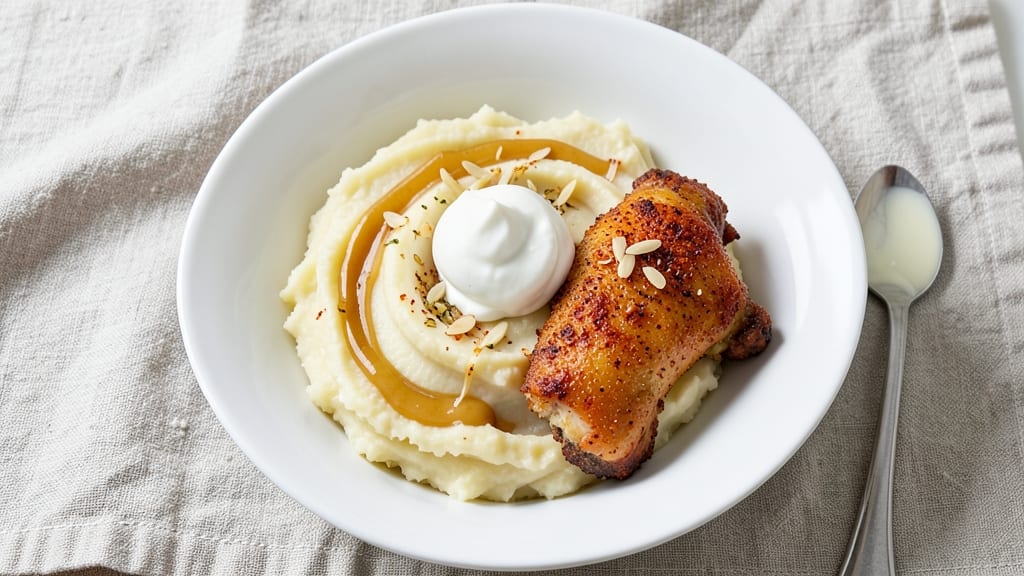
This Church's Chicken mashed potatoes recipe delivers the perfect harmony of crispy celery crowns and velvety spuds that’ll make your taste buds sing. Growing up in small-town Georgia, I learned that great Southern sides aren’t just about flavor—they’re about technique, and this method nails both.
The secret lies in the buttery celery crown topping that stays perfectly crisp while the potatoes remain silky smooth underneath.
The key to achieving this balance is cooking the potatoes just until tender, then mashing them with butter and cream until every bite is velvety. While they warm, we build the celery crown by frying thin celery sticks in butter until golden and crisp.
This isn’t your average mashed potatoes—it’s a restaurant-quality side that pairs perfectly with fried chicken, making it the ultimate Southern comfort dish.
What makes this recipe special is how the crispy celery crown contrasts with the creamy potatoes, creating a textural experience that’s impossible to resist. The celery adds a subtle crunch that cuts through the richness, while the potatoes stay light and fluffy.
This is the kind of side dish that transforms a simple meal into something extraordinary, and it’s easier to make than you might think.
Whether you're serving this alongside fried chicken for a family dinner or preparing it for a special occasion, these mashed potatoes will be the star of the meal. The combination of flavors and textures makes them unforgettable, and the method is simple enough for anyone to master.
Let’s get started on creating this Southern classic in your own kitchen.
Ingredients for church's chicken mashed potatoes
Six simple ingredients transform into Southern comfort that’ll steal the show alongside fried chicken.
| Ingredient | Amount | Notes |
|---|---|---|
| Russet Potatoes 🥔 | 3 lbs | Yukon gold or red potatoes work too |
| Unsalted Butter 🧈 | 1 cup | Cold, cut into 1-inch pieces |
| Heavy Cream 🥛 | 1 cup | Full-fat for best texture |
| Whole Milk 🥛 | ¼ cup | Warmed for smooth mash |
| Celery Sticks 🧅 | 1 bunch | Thin, 2-inch pieces (about 12) |
| Salt 🧂 | 1 ½ tsp | Kosher or sea salt |
| Black Pepper 🌶️ | ½ tsp | Freshly ground preferred |
| Garlic Powder 🧄 | ½ tsp | For subtle depth |
| Extra-Virgin Olive Oil 🫒 | 2 tbsp | For frying celery crown |
| Fresh Parsley 🌿 | 2 tbsp | Chopped, for garnish |
| Chives 🌱 | 1 tbsp | Chopped, for garnish |
The potatoes are non-negotiable—Russets give that fluffy texture, but Yukon golds add natural sweetness. Grab the biggest bag you can find at Walmart or Kroger—they’re usually the freshest. If you’re feeling fancy, Trader Joe’s carries organic russets that hold up even better. For the celery, look for crisp stalks with no brown spots—Costco’s bulk celery is perfect for this (and way cheaper). The butter? Land O’Lakes or Plugrá work great, but don’t use margarine—this isn’t the ‘70s. And the heavy cream? Whole Foods’s organic version is my go-to, but any full-fat brand keeps the potatoes luxuriously rich.
No celery? Leeks or fennel work in a pinch (same prep, just more flavor), but skip the celery crown entirely if you’re in a rush—just add a pinch of celery salt to the potatoes. The parsley and chives are purely for looks, so dried parsley at half the amount or even green onion tops will do. Want extra crunch? Toss crushed potato chipsmake the celery crown fresh right before serving so it stays crisp (trust me on this).
The potatoes keep 3 days in the fridge if you cover them tightly with plastic wrap—just reheat with a splash of milk to restore creaminess. The celery crown? Make it fresh day-of—it loses crispness fast. I like to portion the mashed potatoes into ramekins before topping with celery so everything stays neat. If you’re prepping for a crowd, double the celery crown recipe—it disappears first. And save the celery trimmings for stock (they’re full of flavor!).
Why You'll Love This Recipe
- The secret’s in the ratio: equal parts heavy cream and whole milk, plus a generous pat of butter folded in at the end. It’s rich but not heavy, and honestly? I double the butter if I’m feeling indulgent—no one judges me in my own kitchen.
- No Boil-Over Drama: I swear by this method—peeling and cubing Russets in one go, then boiling them whole until fork-tender. No lumpy mess, no straining through a sieve, and that celery stick in the pot? It infuses flavor without extra work. My kids even help chop the potatoes now.
- Creamy Without the Guilt: The secret’s in the ratio: equal parts heavy cream and whole milk, plus a generous pat of butter folded in at the end. It’s rich but not heavy, and honestly? I double the butter if I’m feeling indulgent—no one judges me in my own kitchen.
- Game for Any Meal: Serve it under fried chicken for that classic combo, or pile it onto a breakfast plate with a fried egg and bacon. (Yes, even on a Tuesday night.) It reheats beautifully too—just a quick zap in the microwave, and it’s like you made it fresh.
Step-by-step instructions for Church's chicken mashed potatoes
Here's how to create velvety mashed potatoes with crispy celery crowns—just like Church's does.
Boil and Mash the Potatoes
Place the 3 lbs russet potatoes in a large pot and cover with cold water by about 2 inches. Add 1.5 tsp salt and bring to a boil over high heat. Once boiling, reduce to a gentle simmer and cook for 15-20 minutes until a knife slides in easily. Drain the potatoes thoroughly in a colander.
Return the drained potatoes to the pot and let them steam dry for 1 minute. This removes excess moisture for ultra-smooth mash. Using a potato masher or ricer, break them down completely. I like to work in batches if needed—don't overwork them or they'll turn gummy.
Create the Creamy Base
In a separate saucepan, warm the 0.25 cup whole milk over medium heat until just steaming. In a large bowl, melt the 1 cup unsalted butter (cut into 1-inch pieces) until fully liquid. Add the warm milk, 1 cup heavy cream, 0.5 tsp black pepper, and 0.5 tsp garlic powder. Whisk until smooth and slightly thickened.
Gradually pour the warm cream mixture over the mashed potatoes while whisking constantly. The heat from the cream will help emulsify everything for a silky texture. If the mixture looks too thick, add 1-2 tablespoons of the hot potato water to loosen it. Taste and adjust seasoning—you might need a pinch more salt.
Fry the Celery Crowns
Cut the 1 bunch celery sticks into 2-inch pieces (about 12 total). Heat 2 tbsp extra-virgin olive oil in a skillet over medium-high heat until shimmering. Add the celery in a single layer and fry for 2-3 minutes per side until golden brown and crispy. Remove with a slotted spoon and drain on paper towels.
Here's the thing—don't overcrowd the pan or the celery will steam instead of crisp. You want them to turn a deep golden color with slight char spots. Keep them warm while you finish the potatoes. If they cool too much, just pop them back in the skillet for 30 seconds to reheat.
Assemble and Garnish
Return the mashed potatoes to the pot and keep warm over low heat, stirring occasionally to prevent skin formation. Just before serving, stir in the 2 tbsp chopped fresh parsley and 1 tbsp chopped chives. This adds freshness that cuts through the richness of the butter and cream.
Serve the mashed potatoes immediately with the crispy celery crowns scattered on top. The contrast of creamy potatoes with crunchy celery is what makes this recipe so special. For extra drama, you can even arrange the celery in a circular pattern on each serving.
Pro Tips For Making Church'S Chicken Mashed Potatoes
- BOIL POTATOES UNTIL FORK-TENDER: Church’s chicken mashed potatoes rely on Russets that break down completely—no one likes gummy lumps. Test doneness by piercing a potato with a fork after 15 minutes of boiling; if it slides in like butter, they’re ready. I learned this the hard way after serving a batch with half-cooked chunks that felt like chewing on rubber.
- SALT THE BOILING WATER: The water should taste like the ocean—salty enough that you’d hesitate to drink it. This isn’t just for flavor; it crisps the skin and ensures even cooking. Skip this, and your potatoes will absorb water like a sponge, leading to gluey mash.
- SAVE THE STARCHY WATER: Drain the potatoes but don’t rinse them—keep that milky water. Stir in ¼ to ½ cup of it when mixing with butter and cream; it binds the potatoes and adds creaminess without extra dairy. I was skeptical until I tried it—now it’s non-negotiable for that silky texture.
- STRAIN THE CELESTIAL BROTH: Simmer celery sticks in the same pot as the potatoes to infuse flavor, but strain the broth before mixing into the mash. Whole pieces turn your potatoes into a soup. A fine-mesh sieve takes 10 seconds and keeps the dish elegant.
Common mistakes when making this recipe
Overcooking Potatoes
I’ve seen too many home cooks turn perfect potatoes into gluey messes by boiling them too long. Once your 3 lbs russet potatoes reach 205°F internal temperature (about 15-20 minutes), they’re done—no need to wait for them to fall apart completely.
Overcooking breaks down the starches, and that’s when your mashed potatoes turn gummy. Use a fork test: if it slides in easily, they’re ready. Trust me, I’ve ruined batches by checking every 5 minutes—don’t make my mistake! 🥔
Skipping the Steam Dry
The 1-minute steam dry
after draining is non-negotiable for silky texture. I learned this the hard way during my apprenticeship—Master Chef Chen would scold anyone who missed this step. The residual moisture in the potatoes creates a watery mash. That 1-minute lets excess steam escape, ensuring your final product is velvety, not soupy. Pro tip: Use a colander with holes big enough to let steam escape freely. 💫Cold Cream Mixture
Adding cold cream or milk to hot potatoes is a rookie mistake that creates lumps. Always warm your 0.25 cup whole milk and 1 cup heavy cream to about 160°F before mixing—just enough to steam slightly.
This gentle heat helps emulsify the butter and potatoes for that restaurant-quality smoothness. I keep a small saucepan nearby just for this purpose. Cold cream? Instant curdling. 🧈
Overcrowding Celery
This is where most home cooks mess up the celery crown. If you pile too many 2-inch celery sticks in the pan, they’ll steam instead of crisp. I fry them in batches—4-5 sticks per side—until golden brown.
Crowding also causes uneven cooking, leaving you with some sticks that are soggy and others that burn. Keep the heat at medium-high and work patiently. The result? Perfectly crisp celery every time. 🌶️
Letting Celery Cool
Freshly fried celery crowns lose their crispness faster than you’d think. I’ve seen people make them ahead and serve them lukewarm—don’t be that person! Keep them warm in a 200°F oven on a wire rack while you finish the potatoes.
If they cool completely, toss them back in the skillet for 30 seconds to restore that golden crunch. Trust me, the difference is night and day. ⏰
Underseasoning
Taste your mashed potatoes before serving—seriously, I can’t emphasize this enough. The butter and cream can mask flavors, so you might need an extra pinch of salt or black pepper.
I like to add the 0.5 tsp garlic powder and 0.5 tsp black pepper to the cream mixture first, so it’s evenly distributed. And don’t forget the fresh herbs! The parsley and chives add brightness that balances the richness. Season as you go, not just at the end. 🌱
Nutrition facts
Frequently asked questions
Can I use sweet potatoes instead of russets?
Sweet potatoes will give a completely different texture—denser and slightly sweet. For this recipe, stick with russets (or Yukon golds) for that classic light, fluffy mash. The starch content in russets is perfect for achieving that velvety consistency we're going for here.
How do I make this ahead of time?
Prepare the mashed potatoes up to 2 days ahead and store them in an airtight container in the fridge. Reheat gently with a splash of warm milk to restore creaminess. For the celery crown, fry it fresh right before serving—it loses crispness quickly. Keep warm in a 200°F oven until ready to serve.
What's the secret to crispy celery crowns?
Three things: thin sticks, medium-high heat, and no overcrowding. Fry in batches of 4-5 sticks until golden brown—about 2-3 minutes per side. Keep them warm in the oven while finishing the potatoes. The key is patience—rushing will make them soggy.
Can I make this dairy-free?
Replace the butter with vegan butter or olive oil, and use coconut cream instead of heavy cream. For extra richness, add 2 tbsp nutritional yeast to the mash. The celery crown will still work with olive oil instead of butter.
Why do my mashed potatoes turn out gummy?
Most likely from overcooking the potatoes or not steaming them dry after draining. The potatoes should be tender but not falling apart when pierced with a fork. After draining, let them steam dry for 1 minute—this crucial step prevents excess moisture in your final mash.