
Sauces & Condiments
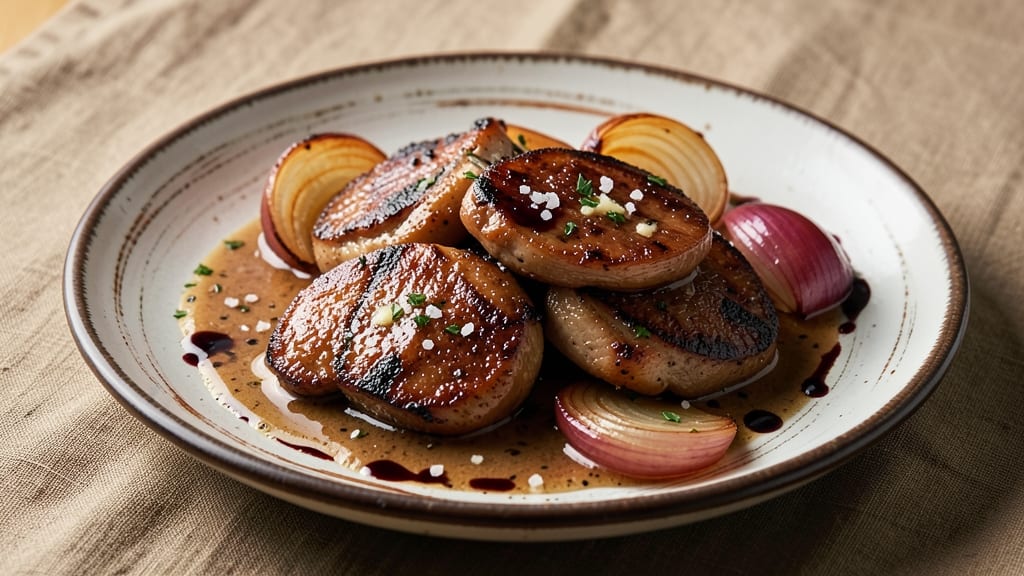
Mastering chicken liver and onions with gravy transforms humble offal into a restaurant-worthy dish that rivals any brunch menu. The secret lies in proper pan-searing to render fat while keeping the meat tender, then building a rich gravy from those flavorful browned bits.
I developed this technique during my apprenticeship under Master Chef Chen, where precision cooking turned simple ingredients into something extraordinary.
This recipe delivers perfectly seared chicken livers with caramelized onions and a velvety herby gravy that coats every bite. The process takes about 30 minutes from start to finish, with just 15 minutes of active cooking time—ideal for a weeknight dinner that feels special.
Proper deglazing of the pan creates a gravy so rich it’ll have everyone asking for seconds, while a splash of wine adds depth that elevates this classic dish.
What makes this dish truly special is the balance of textures and flavors—crisp edges on the livers, tender meat inside, and a gravy that’s both savory and aromatic. The onions develop a natural sweetness from slow cooking, while the gravy ties everything together with its velvety consistency.
This is the kind of recipe that transforms a simple meal into a memorable dining experience.
Serve with toasted crusty bread to soak up every last drop of that luxurious gravy. The technique is straightforward, but the results are anything but ordinary—this is comfort food at its finest, with a professional touch that makes it stand out. Let’s get started on creating this timeless classic.
Ingredients for chicken liver and onions with gravy
Twelve simple ingredients transform humble chicken livers into a luxurious brunch centerpiece.
| Ingredient | Amount | Notes |
|---|---|---|
| Chicken Livers 🍗 | 1 lb | Fresh, trimmed of connective tissue |
| Yellow Onions 🧅 | 2 large | Thinly sliced, about 2 cups |
| Unsalted Butter 🧈 | 4 tbsp | Cold, cut into pieces |
| All-Purpose Flour 🌾 | 1 tbsp | For gravy thickening |
| Dry White Wine 🍷 | ½ cup | Sauvignon Blanc preferred |
| Chicken Stock 🍲 | 1 cup | Homemade or quality store-bought |
| Fresh Thyme Leaves 🌿 | ½ tsp | Chopped, or 1/4 tsp dried |
| Fresh Parsley Leaves 🌿 | 2 tbsp | Chopped, for garnish |
| Salt 🧂 | ¾ tsp | Kosher or sea salt |
| Ground Black Pepper 🌶️ | ½ tsp | Freshly cracked |
| Heavy Cream 🥛 | ¼ cup | Full-fat for richness |
| Olive Oil 🫒 | 1 tbsp | For pan-searing |
The chicken livers are the star, so quality matters. Look for livers that are bright red with minimal connective tissue—Whole Foods or your local butcher are best. If you find any grayish or fibrous pieces, trim them away. The onions should be yellow or sweet varieties like Vidalia, as they caramelize more beautifully. For the wine, Sauvignon Blanc adds a crisp brightness that cuts through the richness, but any dry white will work. Fresh herbs elevate the dish—thyme and parsley are essential, but if you can't find fresh, dried works at one-third the amount.
No white wine? Chicken stock with a splash of lemon juice mimics the acidity. The butter must be cold when added to the livers—this creates a crisp sear. For the gravy, all-purpose flour is standard, but cornstarch can be used for a glossier finish. If you're short on time, pre-sliced onions work, though they lose some moisture during cooking. The heavy cream adds velvety texture, but half-and-half can be substituted if you prefer a lighter finish. For extra depth, a pinch of smoked paprika in the gravy adds complexity without overpowering.
Fresh livers should be used within 2 days and stored in an airtight container in the fridge. The gravy can be made ahead and reheated gently—it actually improves overnight as flavors meld. Leftovers keep for 3 days in the fridge or 1 month frozen. For serving, toast your bread just before adding the gravy to prevent sogginess. This dish reheats beautifully, making it perfect for meal prep—just add a splash of stock or water to loosen the gravy.
Why You'll Love This Recipe
- Pantry-to-Table Speed: I swear by this recipe when I’m starving but don’t want to slave over dinner. Sear the livers in butter, toss in onions, deglaze with wine—boom, 20 minutes later, you’ve got a restaurant-worthy plate.
- Rich, Earthy Magic: That buttery flour gravy clinging to tender livers? It’s like a hug for your taste buds. The onions caramelize just enough to balance the deep, iron-rich flavor—no fancy ingredients, just pure satisfaction.
- Weeknight Workhorse: Serve it over mashed potatoes for a hearty weeknight meal, or pile it onto crusty bread for a brunch crowd-pleaser. Honestly, I’ve even turned leftovers into breakfast hash—versatility at its finest.
- Budget Game-Changer: Chicken livers are dirt cheap, and this recipe stretches them into a meal that feeds four for less than $10. Plus, the leftovers reheat like a dream, so you’re not stuck cooking every night.
Step-by-step instructions for chicken liver and onions with gravy
This classic preparation delivers tender livers and velvety gravy through precise technique and layering flavors.
Prepare and Sear the Chicken Livers
Pat the 1 lb chicken livers completely dry with paper towels, removing any connective tissue or membranes. This step is crucial—moisture will prevent proper searing. Season generously with 0.75 tsp salt and 0.5 tsp ground black pepper, rubbing the spices into the surface to ensure even distribution.
Heat 1 tbsp olive oil in a large skillet over medium-high heat until shimmering. Add the chicken livers in a single layer, leaving space between each piece. Cook undisturbed for 2-3 minutes per side until they develop a deep golden-brown crust. The livers are ready when they release easily from the pan and reach an internal temperature of 145°F. Remove them to a plate and tent with foil to keep warm.
Caramelize the Onions and Build the Gravy Base
In the same skillet, reduce heat to medium and add 2 tbsp of the 4 tbsp unsalted butter. Add the 2 large yellow onions (thinly sliced) and cook slowly for 12-15 minutes, stirring occasionally, until deeply golden and caramelized. This slow cooking process draws out their natural sweetness and creates the foundation for your gravy.
Pour in 0.5 cup dry white wine and scrape up any browned bits from the bottom of the pan. Let it simmer for 3-4 minutes until reduced by half. This deglazing step captures all the rich flavors that would otherwise be lost. Stir in the remaining 2 tbsp unsalted butter and 1 tbsp all-purpose flour, cooking for 1 minute until the mixture forms a smooth paste.
Complete the Gravy and Finish the Dish
Gradually whisk in 1 cup chicken stock, ensuring the mixture doesn't develop lumps. Add 0.5 tsp chopped fresh thyme leaves and bring to a gentle simmer. Cook for 5-6 minutes until the gravy thickens slightly and coats the back of a spoon. The consistency should be velvety but still pourable—if it's too thick, whisk in 1-2 tablespoons of water.
Return the chicken livers to the skillet and gently toss to coat them in the gravy. Stir in 0.25 cup heavy cream and simmer for an additional 2 minutes. The cream will create a luxurious finish while keeping the livers moist. Remove from heat, garnish with 2 tbsp chopped fresh parsley leaves, and serve immediately while the livers are still warm and the gravy is at its peak consistency.
Pro Tips For Making Chicken Liver And Onions With Gravy
- Rinse Livers First: Blood and bile make livers bitter—give them a quick cold water rinse, then pat very dry with paper towels. I learned this the hard way after serving a batch that tasted like iron. Trust me, the extra 30 seconds saves your dish.
- Sear Onions Low: Onions caramelize best at medium-low heat—high heat burns them before they soften. Let them sweat for 10 minutes first, then crank up the heat for the final color. Yes, it’s slower, but the flavor pays off.
- Deglaze Immediately: As soon as those livers hit the pan, the fond sticks like glue. Add the white wine right away while it’s still hot—scrape every last bit with a wooden spoon. That’s where the depth of flavor hides.
- Whisk Flour Fast: Toss that flour into the butter all at once, then whisk like you’re mad for 30 seconds. Lumps ruin gravy texture, and stirring slowly just makes it grainy. (I know, I know—it’s tempting to go slow.)
Creative variations of this dish
Classic French Twist
For a restaurant-quality touch, I add 1 tbsp Dijon mustard to the gravy base after deglazing with wine. This brings a subtle tang that cuts through the richness while adding depth.
I also replace half the chicken stock with ¼ cup cognac or brandy—just reduce it first to burn off the alcohol. The result is a gravy with complex layers that feels truly special. Serve with baguette slices for perfect dipping. 🍷
Smoky BBQ Version
Swap the white wine for ½ cup BBQ sauce (I love Sticky Fingers original) and add 1 tsp smoked paprika to the gravy. After caramelizing the onions, stir in 2 tbsp apple cider vinegar for brightness.
Top with crumbled bacon and chopped scallions for a Southern-inspired twist that’s perfect for brunch or dinner. The smoky-sweet gravy pairs beautifully with cornbread. 🔥
Creamy Mushroom Upgrade
Sauté 8 oz sliced cremini mushrooms alongside the onions until golden. Deglaze with wine as usual, then stir in ¼ cup mushroom duxelles (finely chopped mushrooms cooked down) before adding the stock.
Finish with 1 tbsp crème fraîche instead of heavy cream for a lighter, more refined texture. Garnish with chives for a sophisticated touch that feels like a bistro dish. 💫
Spicy Cajun Kick
Boost the heat by adding 1 tsp Cajun seasoning (like Tony Chachere's) to the livers before searing. Build the gravy with ½ cup chicken stock and 2 tbsp hot sauce (like Crystal or Tabasco).
Finish with 1 tbsp chopped jalapeños and a squeeze of lemon. Serve with buttered grits to soak up the fiery gravy. This version is a crowd-pleaser for those who love bold flavors. 🌶️
Herb-Infused Gravy
Take your gravy to the next level by infusing it with fresh herbs. After adding the stock, stir in 1 sprig rosemary and 1 sprig tarragon along with the thyme. Remove the stems before serving.
For extra aroma, add 1 tsp lemon zest to the gravy. The herbs add a bright, aromatic quality that elevates the dish without overpowering it. Perfect for a spring or summer meal. 🌿
Make-Ahead Gravy Hack
Prepare the gravy completely ahead of time and store it in the fridge. When ready to serve, simply reheat it gently with the livers—add 1 tbsp water or stock to loosen it. For extra richness, stir in 1 tbsp cold butter at the end.
This is my go-to trick for busy mornings or when I want to impress guests with minimal last-minute effort. The flavors actually deepen overnight. ⏰
Nutrition facts
Frequently asked questions
Why do chicken livers need to be patted completely dry before cooking?
Moisture on the surface prevents proper searing, causing the livers to steam instead of developing that rich golden crust. When dry, they release their natural fat and create flavorful browned bits for the gravy. This step is non-negotiable for perfect texture.
Can I substitute white wine in the gravy with something else?
Use ½ cup chicken stock + 1 tbsp lemon juice for acidity, or ½ cup apple cider for sweetness. For depth, try 2 tbsp soy sauce + 1 tsp vinegar. The key is balancing acidity and umami to cut through the richness.
What's the best way to fix rubbery chicken livers?
Overcooking is the culprit. Livers should cook just until they reach 145°F internally (2-3 minutes per side). If they turn tough, slice them thin and quickly pan-sear again with a splash of water to steam them gently. Never overcrowd the pan—space is crucial for even cooking.
How do I make the gravy thicker or thinner?
For thicker gravy, simmer uncovered for 2-3 extra minutes or whisk in 1 tsp cornstarch mixed with cold water. For thinner gravy, whisk in 1-2 tbsp warm stock or water. The consistency should coat the back of a spoon but remain pourable. Adjust gradually!
What's the ideal serving temperature for this dish?
Serve immediately at 160°F for perfect texture—livers cool quickly and become tough. The gravy should be warm but not boiling. For leftovers, reheat gently with a splash of stock to restore richness. Always serve with toasted bread to soak up every last drop.